
Gentle Yoga for Deep Relaxation and Hamstrings Release
The hamstrings are often affected not only by physical habits like prolonged sitting, but also by the way the nervous system responds to stress. Tightness here can reflect a body that is constantly bracing. This gentle practice invites a shift toward softening, support, and restorative awareness.
Using a strap as a prop allows the body to feel held rather than forced. The pace remains slow and intentional, encouraging the parasympathetic nervous system to take the lead and guide the body toward deep relaxation.
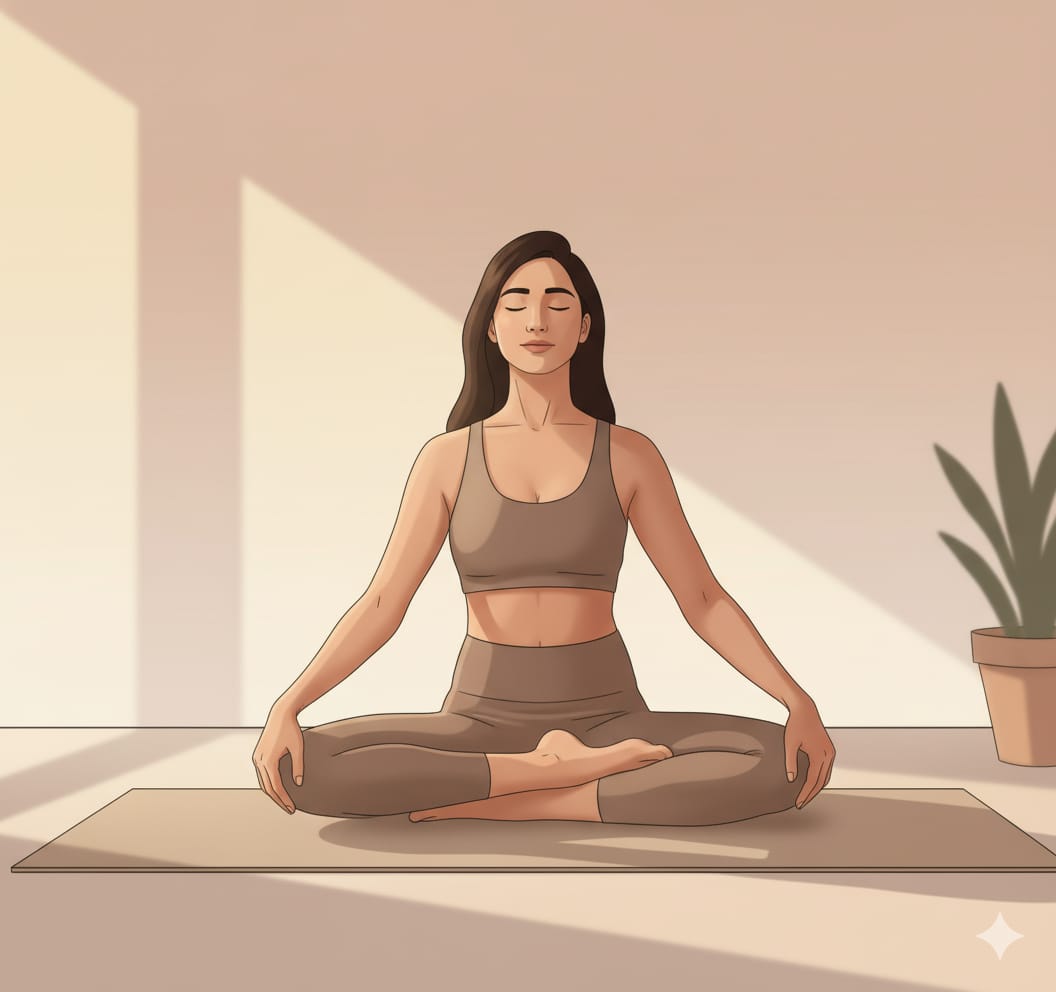
Arriving and Setting Intention
The practice begins with conscious breathing and an invitation to arrive fully. Intention setting here is gentle and inward looking, creating a sense of self embrace and safety. This opening phase prepares both mind and body for deeper release.
Warm Up Through Subtle Movement
Lying down allows the body to surrender to gravity. Gentle leg circles and hip focused movements warm the joints without strain. Attention stays on sensation rather than effort, reinforcing ease over intensity.
Core Support and Stability
Light core engagement during leg lifts offers stability and protection for the lower back. Modifications make this accessible for those with sensitivity, reminding practitioners that support creates freedom.
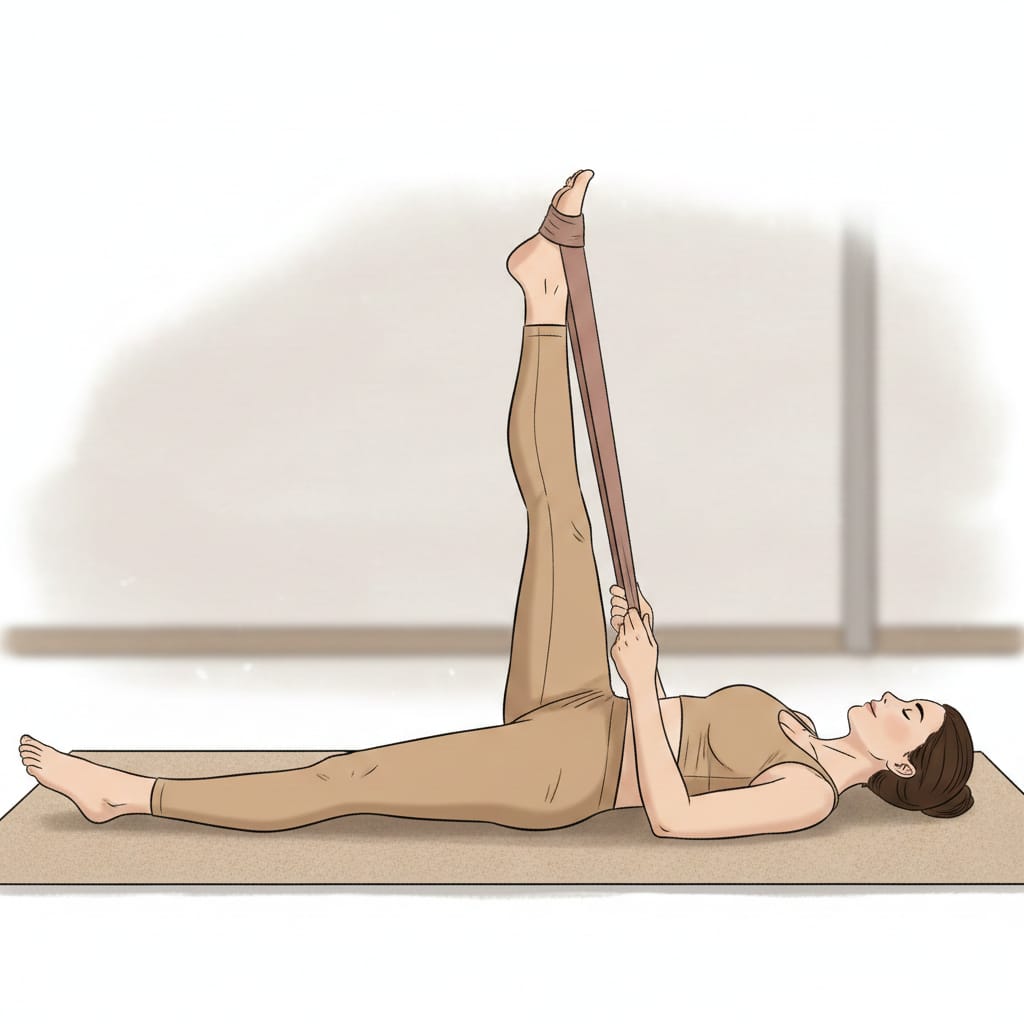
Hamstrings Release With the Strap
The strap becomes a tool for communication rather than force. By bending and extending the elbows while keeping the leg straight, the stretch deepens gradually. This approach respects the body’s boundaries while allowing progress without tension.
Dynamic Engagement and Awareness
Lifting the head toward the knee introduces gentle effort, engaging both the hamstrings and the core. Movement remains mindful, reinforcing the idea that strength and softness can coexist.
Twists, Forward Fold, and Integration
Spinal twists help reset the nervous system while releasing residual tension. Butterfly pose and the forward fold offer a final invitation for the hamstrings to lengthen naturally. The emphasis stays on a long spine and relaxed breath, encouraging integration rather than achievement.
The session closes with calm seated stillness and alternate nostril breathing, guiding the body into a state of restful balance.
Tap to practice this gentle hamstrings release yoga and allow the body to rest deeply.
Begin the practice