
Can't Do the Splits? 9 Hidden Reasons You're Still Stuck (Fix Them Fast)

You've been stretching for months. You show up to the mat, hold your hamstring stretches dutifully, breathe through the discomfort — and still, the floor feels impossibly far away. If you've been chasing the splits and feeling like your body has its own locked-in agenda, you're not alone. Flexibility isn't simply about effort. It's about understanding what's actually holding you back.
Most people assume the splits are just a hamstring problem. In reality, the body is a layered, intelligent system, and your stiffness might be rooted in fascia, the nervous system, hydration, sleep, or even the way you breathe. Here are nine often-overlooked reasons you're still stuck — and exactly what to do about each one.
"Stretching a muscle that isn't neurologically safe will get you nowhere. Before your body opens, your nervous system must believe it's safe to let go."
01 — The Nine Hidden Reasons
- 01 Nervous System Overprotection. Your brain governs flexibility more than your muscles do. If your nervous system perceives a stretch as threatening, it will contract the muscle to protect you. Practice proprioceptive neuromuscular facilitation (PNF) — contract, hold 5 seconds, release — to re-educate the reflex arc.
- 02 Fascial Adhesions. Fascia is the connective tissue webbing your entire body. When it becomes dense or dehydrated, no amount of muscle stretching will create length. Use a foam roller or massage ball before stretching to release fascial restrictions first.
- 03 Skipping the Warm-Up. Cold tissue tears, not lengthens. A 10-minute dynamic warm-up — leg swings, hip circles, low lunges — primes blood flow and raises tissue temperature so your stretches actually translate into lasting change.
- 04 Chronic Dehydration. Muscle and fascia are largely water. Dehydrated tissue is less pliable, more prone to strain, and dramatically less responsive to stretching. Aim for at least 2.5 litres of water daily and notice how your body softens.
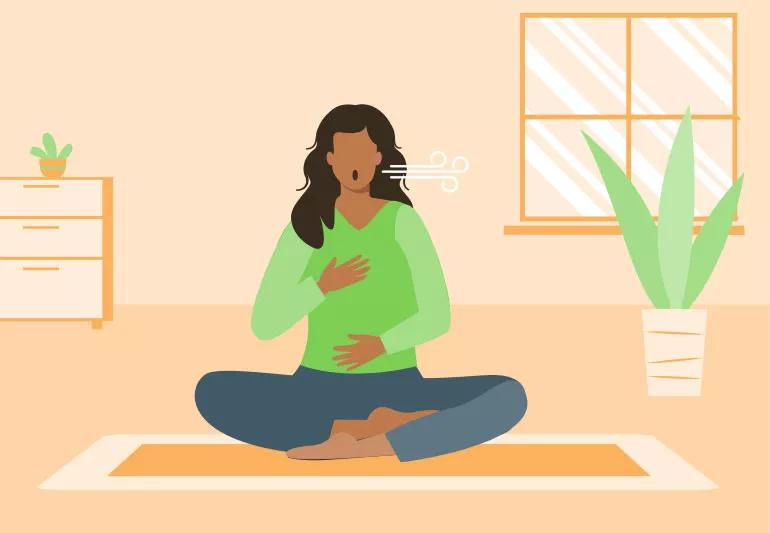
- 05 Holding Your Breath. When you hold your breath in a stretch, you activate the sympathetic nervous system — the very system that locks your muscles down. Slow, controlled exhales signal safety to the body and allow deeper release.
- 06 Only Stretching, Never Strengthening. Hypermobility without strength is instability. Your body won't let you go deeper into the splits if the muscles around the hips aren't strong enough to control that range. Add hip flexor and glute strengthening exercises to your routine.
- 07 Poor Sleep Recovery. Deep sleep is when myofascial tissue repairs itself. Chronically poor sleep raises cortisol, which increases muscular tension. Seven to nine hours of quality sleep is part of your flexibility training.
- 08 Inconsistent Practice. Stretching three days a week and skipping four will create a two steps forward, one step back pattern. Connective tissue responds to consistent, daily minimum stimulus — even 10 minutes a day beats an hour on weekends.
- 09 Ignoring Hip Flexor Tightness. The psoas muscle — your deepest hip flexor — dictates how far your pelvis can tilt. If it remains tight from long sitting hours, your splits will plateau. Low lunge holds of 90 seconds or more are non-negotiable.

02 — What Your Body Is Actually Telling You
Stiffness is not a character flaw. It is information. When you feel resistance in a stretch, your body is communicating one of three things: insufficient warmth, neurological protection, or accumulated fascial density. Learning to listen instead of push is what separates those who progress from those who plateau — or worse, injure themselves trying.
The splits become available not when you force the body open, but when you earn the nervous system's trust over time. The most transformative shift is treating your flexibility practice as a conversation, not a demand.
Think of the last time you stretched with frustration versus the last time you stretched with curiosity. Which session felt more open? Your emotional state is part of your flexibility equation — and it's one you can always choose to change.
03 — Your Daily Fix Protocol
Building splits is a daily micro-investment. A simple sequence: 5 minutes of joint mobility, a 10-minute full-body warm-up, 3 rounds of PNF stretching for hamstrings and hip flexors, and 2 minutes of breathwork to close. Done with consistency for 8 weeks, most practitioners see measurable shifts in range of motion.
04 — The Mental Side of Flexibility
Anxiety tightens the body. Frustration tightens the body. The mental state you bring to your mat has direct physiological consequences. Practitioners who combine mindfulness with physical stretching show measurably better flexibility outcomes than those who stretch mechanically. Your mind is part of the muscle.
- 01Are you arriving at the mat with patience, or with a goal that creates pressure?
- 02Have you had enough water today, and when did you last eat a full meal?
- 03Is there a place in your body that feels emotionally tight, not just physically?
- 04Can you make a quiet commitment to breathe through every moment of discomfort today?
A step-by-step guided session to open hips, lengthen hamstrings, and safely work toward full splits — at any level.
Stay consistent. Your body will open when your mind softens.
Explore more guided practices with Yogaendless.
The splits are not the destination — they are the evidence of a deeper transformation in how you relate to your own body. Go slowly. Go often. Go with kindness. The floor will meet you when you stop fighting and start listening.
Your body is not broken. It is simply waiting for you to understand its language.
— The Yogaendless Editorial Team