

Backbends hold a particular kind of fear for many practitioners. There is the fear of falling, the fear of compression, the fear of simply not being flexible enough — and underneath it all, a deeper reluctance to open the chest wide, to become vulnerable in a direction the body rarely moves through everyday life. If you have ever stood at the edge of a wheel pose and retreated, or collapsed out of a camel before the breath had a chance to settle in, you are not alone. Backbends are not just physical challenges. They are emotional ones.
The good news is that the body opens in layers. With the right preparation — warming the thoracic spine, activating the posterior chain, breathing with intention — what once felt like a wall begins to feel like a door. This intermediate flow was built exactly for that transition: not to push you past your edge, but to bring you into a genuine, embodied conversation with your back body.
The key to a sustainable backbend is not flexibility alone — it is the intelligence of how you prepare the spine, one layer at a time, before the full expression ever arrives.
Why Most Backbend Attempts Fall Short
The most common mistake is reaching for depth before establishing length. When the lumbar spine carries the majority of the backbend without thoracic mobility to share the load, discomfort follows quickly. The flow below deliberately reverses that tendency — beginning with chest openers, shoulder work, and supported bridges so that by the time you reach your peak pose, your spine has already rehearsed the shape dozens of times in smaller, safer increments.

The Intermediate Backbend Flow
Begin in child's pose, then move through cat-cow to wake the entire spine. Progress into a low lunge with a heart-opening twist, then sphinx pose held for five long breaths. From there, move into locust pose — arms and legs lifting simultaneously — to activate the posterior chain. Bridge pose with a block under the sacrum follows, giving the lower back a chance to release. Finally, if the body is ready, camel pose or a full wheel becomes available — not as a goal, but as a natural expression of everything that came before it.
- Where in your back body do you feel the most tension right now?
- Is your breath short or expansive as you imagine opening your chest?
- What would it mean for you to feel ease — not strain — in a backbend?
- Can you set an intention of curiosity rather than achievement today?
Breath as the True Architecture
Every backbend is only as deep as the breath that holds it. Inhaling into the front ribs on the way in, exhaling fully on the way out — this rhythm creates a muscular scaffolding that protects the spine far better than any forced flexibility can. If the breath stops, the pose has gone too far. That is not a rule imposed from outside. It is information the body is offering you, every single time.
What Your Body Might Be Protecting
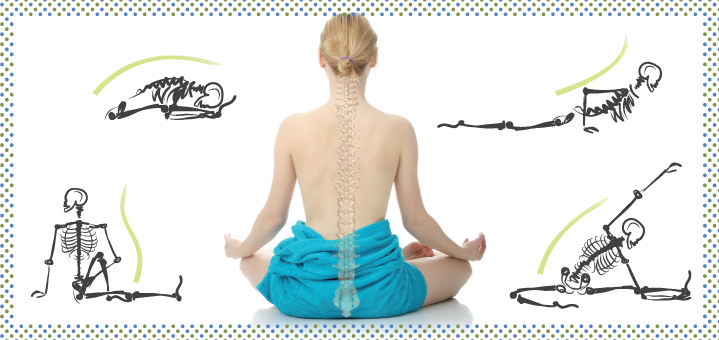
It is no coincidence that the heart center sits at the apex of every backbend. Chest tightness, upper back tension, a catch in the breath — these often reflect not just physical holding, but emotional guarding accumulated over years of sitting hunched, of protecting ourselves from hurt. Practitioners frequently report unexpected waves of emotion when the thoracic spine finally releases in a supported heart opener. This is not drama — this is the body's intelligence unwinding. Honour it. Slow down if you need to. The floor is always there.
Flexibility in the spine is also flexibility in perspective. The same quality that allows your back body to open outward — trust, softness, willingness — is the same quality that allows life to move through you with a little less resistance. Practice does not stay on the mat. It seeps into every doorway you walk through.
Explore Yogaendless guided sequences built for gradual, sustainable opening — on your schedule, at your pace.
Explore All PracticesMove without pressure. Let your body flow without force.
Explore more guided practices with Yogaendless.