What Tight Hips Mean for Your Body (And How Yoga Can Help)
You've probably heard it before — "I have really tight hips." It's one of the most common complaints that brings people to yoga for the first time, and one of the most commonly misunderstood. Tight hips aren't simply a flexibility problem. They're a message — a quiet, persistent signal from your body that something in the way you live, move, and hold yourself needs attention. And the good news? Yoga is one of the most effective tools we have for listening and responding.
Whether you sit at a desk for hours, carry stress in your lower body, or simply haven't moved your hip joints through their full range in years — tightness builds slowly, invisibly, until it shapes the way you walk, breathe, and feel in your own skin. Understanding what your hips are trying to tell you is the first step to finding lasting relief.
When people say their hips feel tight, they're usually describing a complex web of muscular and fascial restrictions rather than a single isolated muscle. The hip joint is surrounded by some of the body's most powerful muscle groups — the hip flexors (including the psoas and iliacus), the glutes, the piriformis, the adductors, and the external rotators. Any one of these — or a combination — can develop patterns of chronic shortening or guarding that create that familiar sense of compression and resistance.
Tightness most often develops in response to the positions we stay in longest. Sitting keeps the hip flexors in a shortened state for hours at a time. Repetitive movements like running or cycling strengthen certain muscles while neglecting their opposing groups. Even emotional stress can contribute — the body has a primal habit of drawing inward and bracing around the pelvis in response to perceived threat, a pattern that can become chronic without conscious release.
 The Ripple Effects Through Your Body
Tight hips don't stay politely contained in the hip region. Because the pelvis sits at the structural centre of the body — connecting the spine above to the legs below — restrictions here radiate in every direction. When the hip flexors shorten, they pull the front of the pelvis downward, creating an anterior pelvic tilt. This compresses the lumbar spine, overloads the lower back muscles, and can contribute to the chronic ache that millions experience as simply "a bad back."
The effects travel downward too. Tight hips alter the mechanics of the knee and ankle with each step, gradually increasing the risk of injury in joints that were never designed to compensate for a restricted pelvis. What begins as "tight hips" becomes, over time, a whole-body postural story.
The Connection to Stress and EmotionYogic philosophy has long recognized the pelvis as a storehouse of emotional experience, and contemporary somatic research increasingly supports this view. The hip region is richly connected to the autonomic nervous system — particularly through the psoas, which shares neurological proximity with the fight-or-flight response. Chronic stress keeps this muscle in a state of low-grade contraction, even when there is no immediate physical threat.
This is why a deep hip opening in yoga can sometimes bring unexpected emotional releases — not because something dramatic is happening, but because the tissue is finally letting go of held tension. The mat becomes a place where the body is given permission to complete something it has been holding unfinished.
 How Yoga Addresses Hip Tightness Uniquely
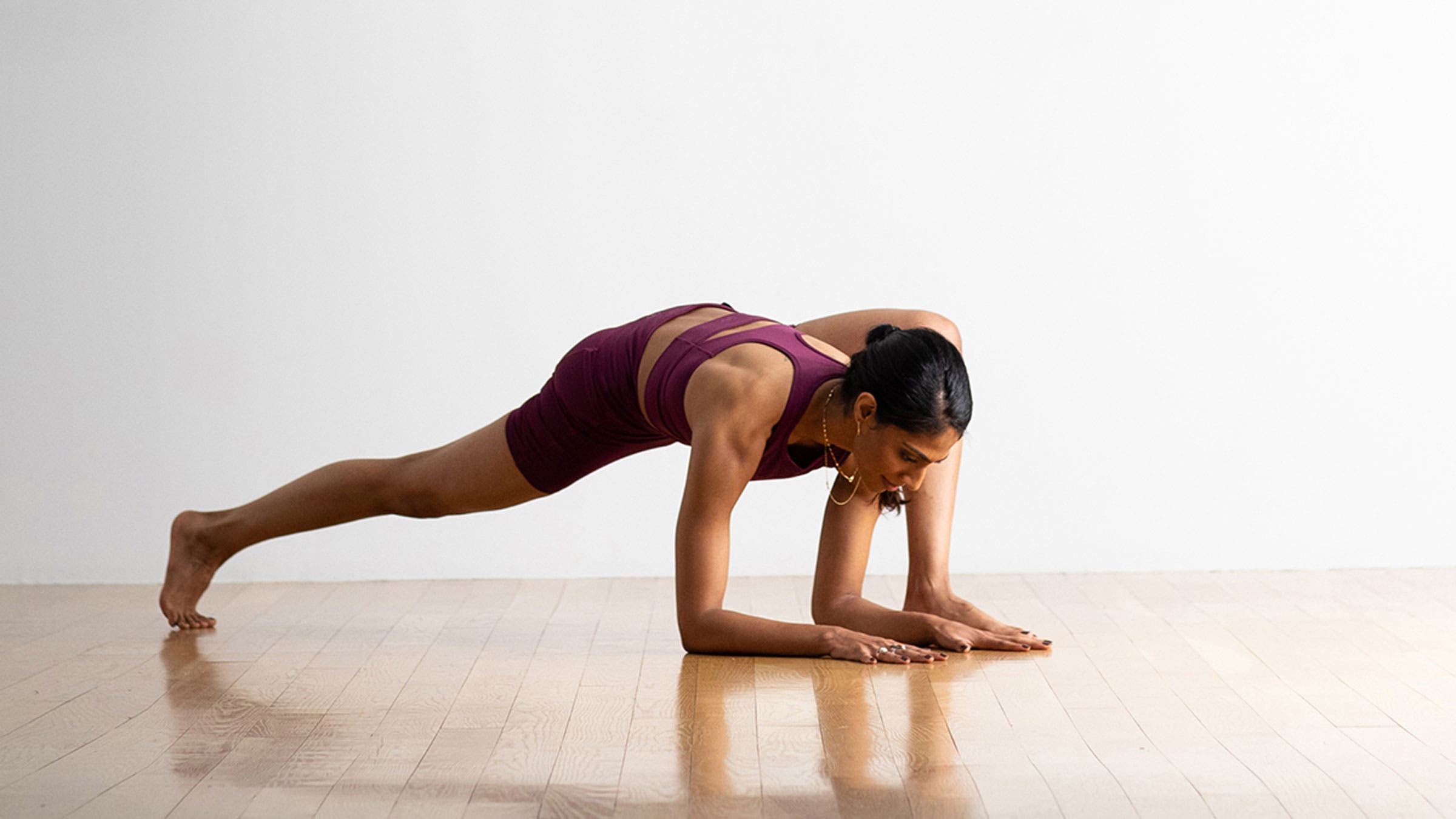
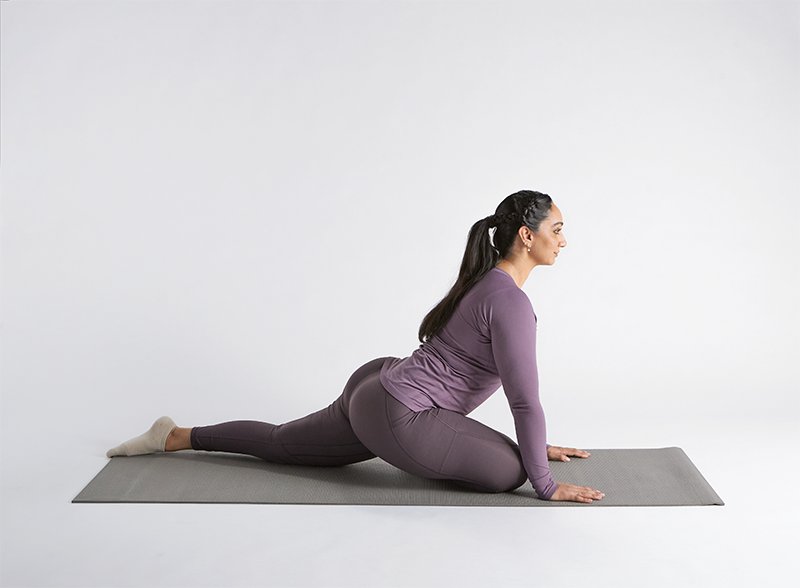
Stretching alone tends to target muscle tissue in isolation and only temporarily. Yoga takes a more integrated approach. Poses like Pigeon (Eka Pada Rajakapotasana), Low Lunge (Anjaneyasana), Lizard (Utthan Pristhasana), and Reclined Bound Angle (Supta Baddha Konasana) work not just on individual muscles but on the connective tissue — fascia — that wraps and connects everything. Fascia responds to sustained, gentle pressure over time, not to force.
Crucially, yoga pairs physical openings with breath. Slow, conscious breathing activates the parasympathetic nervous system — the only condition under which the body is neurologically willing to release deeply held tension. You cannot stretch your way out of a tight psoas while your nervous system is still in stress mode. The breath is the key that unlocks the door the stretch is pointing to.
Building a Hip-Focused Yoga PracticeConsistency matters far more than intensity when working with hip tightness. A 10-minute daily practice will outperform a weekly deep-dive every time. Begin with a supine hip circle to lubricate the joint, move into a low lunge held for 90 seconds each side, follow with pigeon or figure-four for the external rotators, and close with legs up the wall or a reclined twist. This sequence addresses all major hip muscle groups without requiring any prior flexibility.
The most important instruction in any hip-opening practice: don't push. The hips open from softening, not from force. If you feel yourself gripping — in the jaw, the hands, the breath — you've gone past the useful edge. Back off slightly, breathe, and let the body open at its own pace.
Mindful Check-In
Let this guided session take you through a deep, unhurried hip-opening flow — designed to work with your body's intelligence, not against it. No forcing. No gripping. Just breath, movement, and release.
Move without pressure. Let your body flow without force.
Explore more guided practices with Yogaendless.
Hundreds of guided practices. Every level. Every mood. All in one place.
Visit Yogaendless →Your hips carry the story of your life in their tissue. Yoga is the practice of meeting that story with curiosity rather than frustration — and discovering, slowly, that the body was always capable of more openness than it was given the space to show.