Period Pain Ruining Your Day? This Gentle Yoga Flow Can Change Everything
You know that moment. You wake up and before you even sit up, you already feel it — that deep, gripping ache that tells you today is going to be a battle. The cramps settle in, the fatigue pulls at your edges, and the idea of doing anything — let alone moving your body — feels almost impossible. But here is what nobody tells you: movement, done the right way, might be the very thing that finally gives you relief.
Gentle yoga is not about being strong or flexible on your most painful days. It is about using your breath, gravity, and the wisdom of slow movement to release the tension that makes period pain worse. Thousands of people have discovered that a simple 20-minute flow can shift what might have been an entire day lost to a heating pad into something softer — more manageable, more human. This is that flow.
It feels counterintuitive. Pain says stop. But the kind of movement yoga offers does not aggravate cramping — it addresses its root causes. Menstrual cramps tighten the uterine muscle, restrict local blood flow, and trigger the nervous system into a low-grade stress response. Stillness can lock all three of those things in place. Gentle movement — particularly hip openers, forward folds, and twists — physically encourages circulation back to the pelvis, relaxes the surrounding musculature, and sends a signal through the vagus nerve that it is safe to soften.
Even five minutes of conscious movement can interrupt the tension-pain-tension cycle that makes cramps spiral. The key is choosing the right poses, performed without ambition — slowly, breathfully, and with full permission to stop whenever your body needs rest.
This sequence is designed to take approximately 20 minutes, moving from the floor upward, so you never have to do anything sudden or strenuous. Begin by lying on your back with your knees bent and feet flat — spend two minutes here simply breathing, letting your belly rise and fall without effort. This alone begins to relax the abdominal wall.
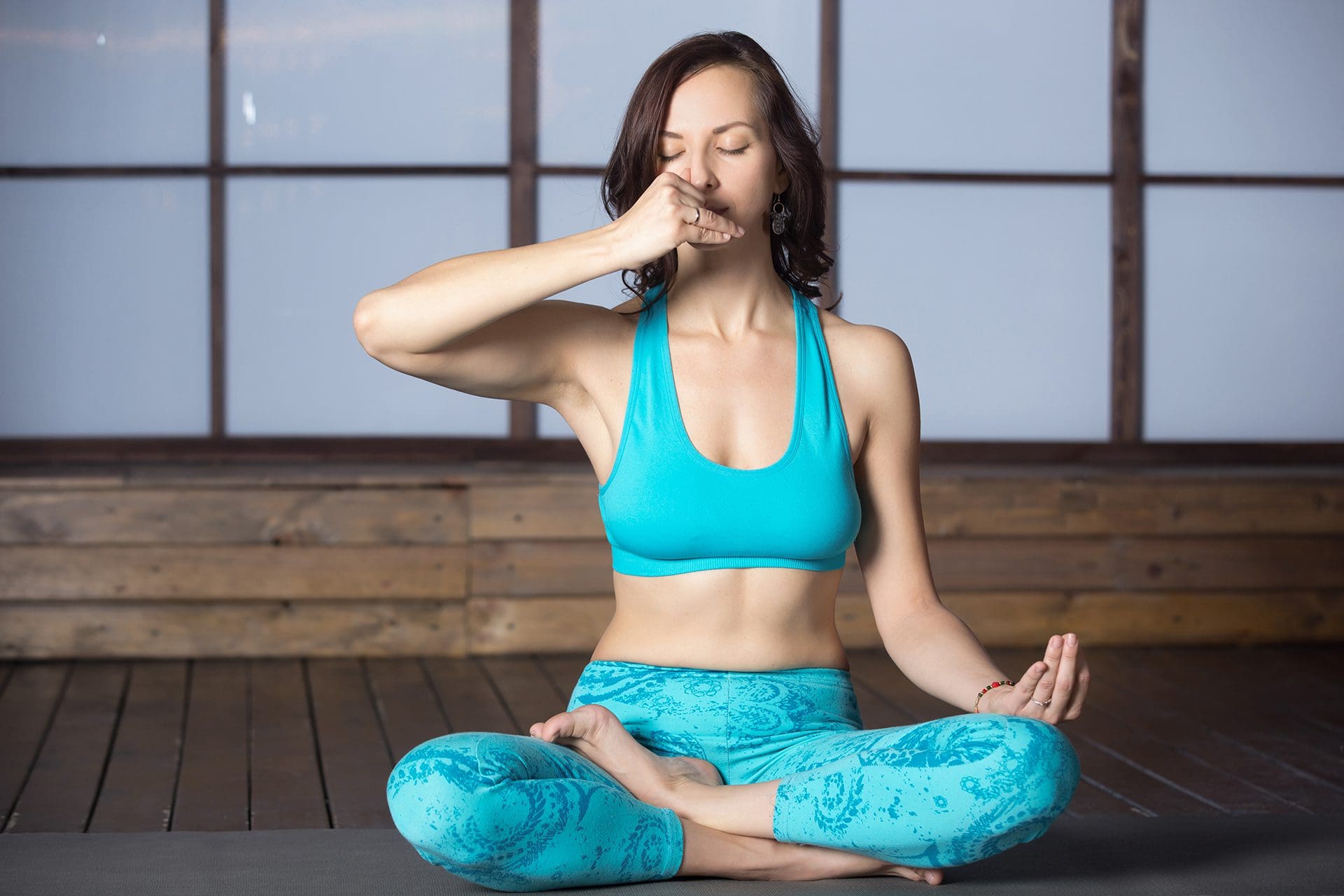
No posture in this sequence matters more than the breath that accompanies it. When you breathe shallowly — chest-only, rapid — you keep the sympathetic nervous system activated, which sustains muscular tension and intensifies the perception of pain. But when you deepen the exhale — making it longer than the inhale — you stimulate the parasympathetic response, physically relaxing the uterus and the muscles around it.
Throughout this flow, practice a 4-count inhale through the nose, followed by a slow 6 to 8-count exhale through a softly open mouth. On every exhale, consciously release any gripping in the abdomen, the jaw, the hands. Pain contracts us — breath can open us back up, one exhale at a time.
 How to Support Your Body Around the Practice
Before you begin, apply warmth to your lower abdomen for 10 to 15 minutes — a hot water bottle, a microwavable pad, or even a warm damp towel. Heat relaxes smooth muscle (the kind that makes up the uterine wall), making every pose in your flow more effective. You can keep the warmth nearby during practice too, resting it across your pelvis during Reclined Bound Angle or Child's Pose.
After your practice, drink warm water or ginger tea. Ginger has well-documented anti-inflammatory properties and can help address cramping from the inside while yoga addresses it from without. Avoid cold drinks immediately after movement, as they can cause the uterine muscle to contract again. This whole ritual — warmth, movement, warmth — tells your entire system that it is held, that it is safe, that it can let go.
Making This Flow a Monthly RitualThe most powerful version of this practice is the consistent one. When your body learns that this gentle flow is coming — that it will be met with warmth, slow breath, and unhurried movement — it begins to prepare differently. Chronic tension patterns in the pelvis start to ease between cycles. Your nervous system's baseline shifts toward greater resilience. The anticipatory dread of your period, for many people, begins to soften too.
You do not need a perfect mat, a dedicated room, or even a full 20 minutes every time. Five minutes of Child's Pose with deep breathing is not a compromise — it is a complete act of self-care. Start there. Build when your body invites it. And return to this flow as many months as you need it, because it will be here waiting for you every single time.
Mindful Check-In — Before You Begin
"Pain asks you to contract. Yoga asks you to expand — slowly, bravely, one breath at a time. You are not fighting your body today. You are listening to it. And that changes everything."
This guided practice will lead you through every pose — gently, with full instruction, and at a pace made for your most tender days. All you need is your mat and 20 minutes.
Move without pressure. Let your body flow without force.
Explore more guided practices with Yogaendless.
Explore the Full Yogaendless Library
Hundreds of guided practices. Every level. Every mood. All in one place.
Visit Yogaendless →Your period does not have to ruin your day. Not because you push through it, not because you ignore it — but because you finally give your body exactly what it has been asking for. Breath. Warmth. Slowness. Compassion. That is what this flow offers. And once you feel the difference it makes, you will never face another cycle without it.