There is a paradox at the heart of yoga that most practitioners eventually discover: the deepest stillness is not found in sitting motionless — it is found in moving with complete, unhurried attention. When you slow a stretch down until you can hear your own breath, when you hold a pose long enough to feel your nervous system exhale, that is when the noise stops. That is when focus becomes effortless.
In a world that rewards speed, a deep stretch flow is an act of quiet rebellion. It asks you to stay — in the discomfort, in the sensation, in the present moment — longer than feels comfortable. And in that staying, something extraordinary happens. Your scattered mind stops chasing the next thought and begins to settle. You stop doing yoga and start being in it.
Why Deep Stretching Builds a Focused Mind
Most people think of focus as something you summon mentally — a grit-your-teeth, push-harder quality. But neuroscience tells a different story. True, sustained focus emerges from a regulated nervous system, not a forced one. When you are in fight-or-flight mode, your attention is fractured — scanning for threats, jumping between tasks, unable to settle. Deep stretching works directly on the vagus nerve, signaling to your brain that you are safe, present, and able to attend.
The long holds in this practice also train a specific kind of mental discipline: the ability to stay with discomfort without fleeing it. That same skill — noticing the urge to move away and choosing to remain — is the neurological foundation of focus itself. Every time you breathe into a challenging stretch instead of releasing it, you are literally training your attention.
Before You Begin: Setting the Container
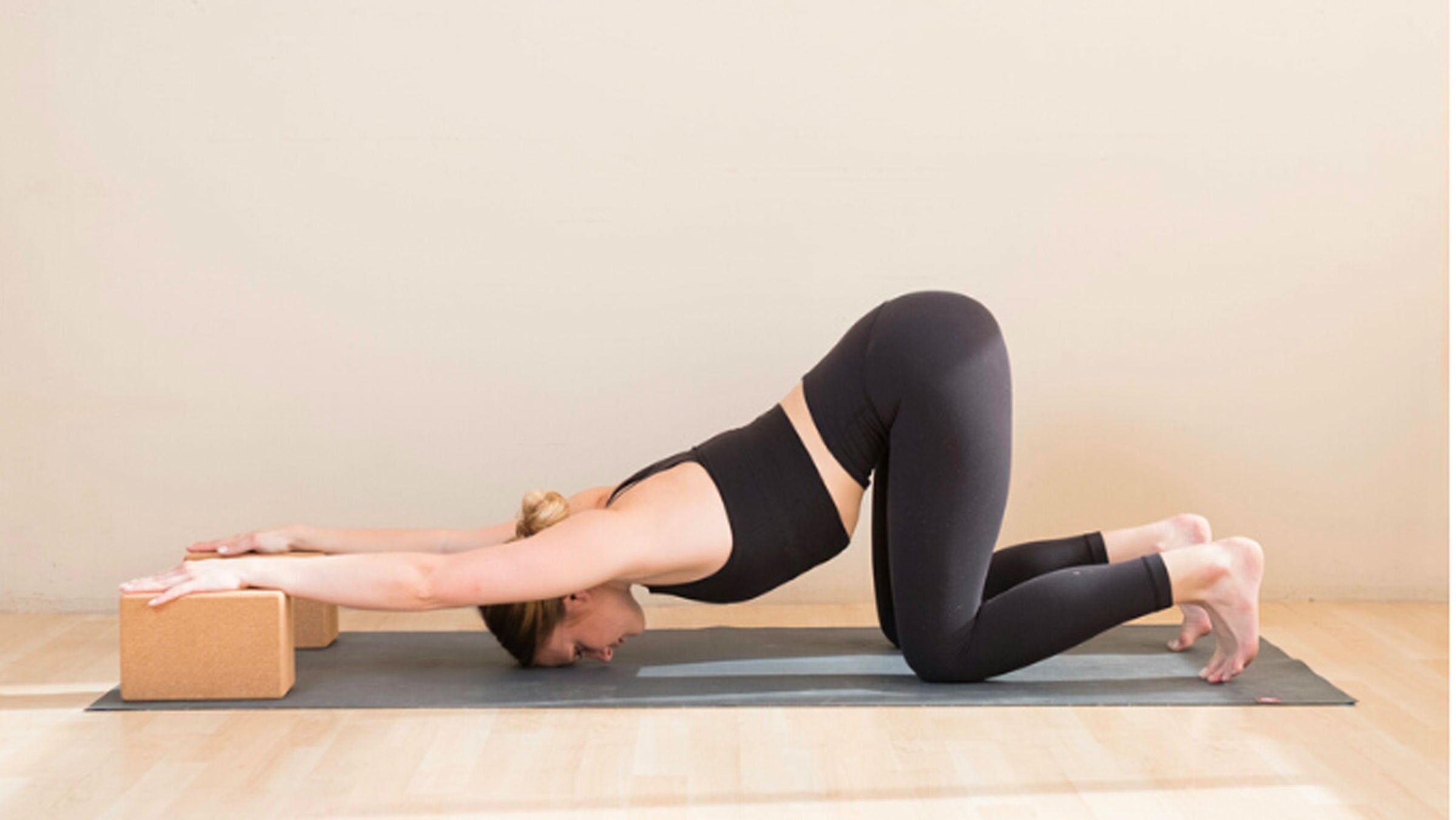
A deep stretch practice asks more of you than a vinyasa flow because it asks you to be still with yourself. Before you begin, take a moment to create the right container. Turn off notifications. Find a quiet space. Lay out your mat with intention. If you have a bolster, blanket, or blocks — gather them. Props are not a sign of limitation in this practice; they are what allow you to stay longer, go deeper, and surrender more fully.
Set a loose intention before your first pose. Not a goal — an intention. Something like "I will stay with each breath" or "I choose presence over performance." This single phrase will become your anchor when the mind starts to wander mid-hold, which it will. That is not failure. That is the practice.
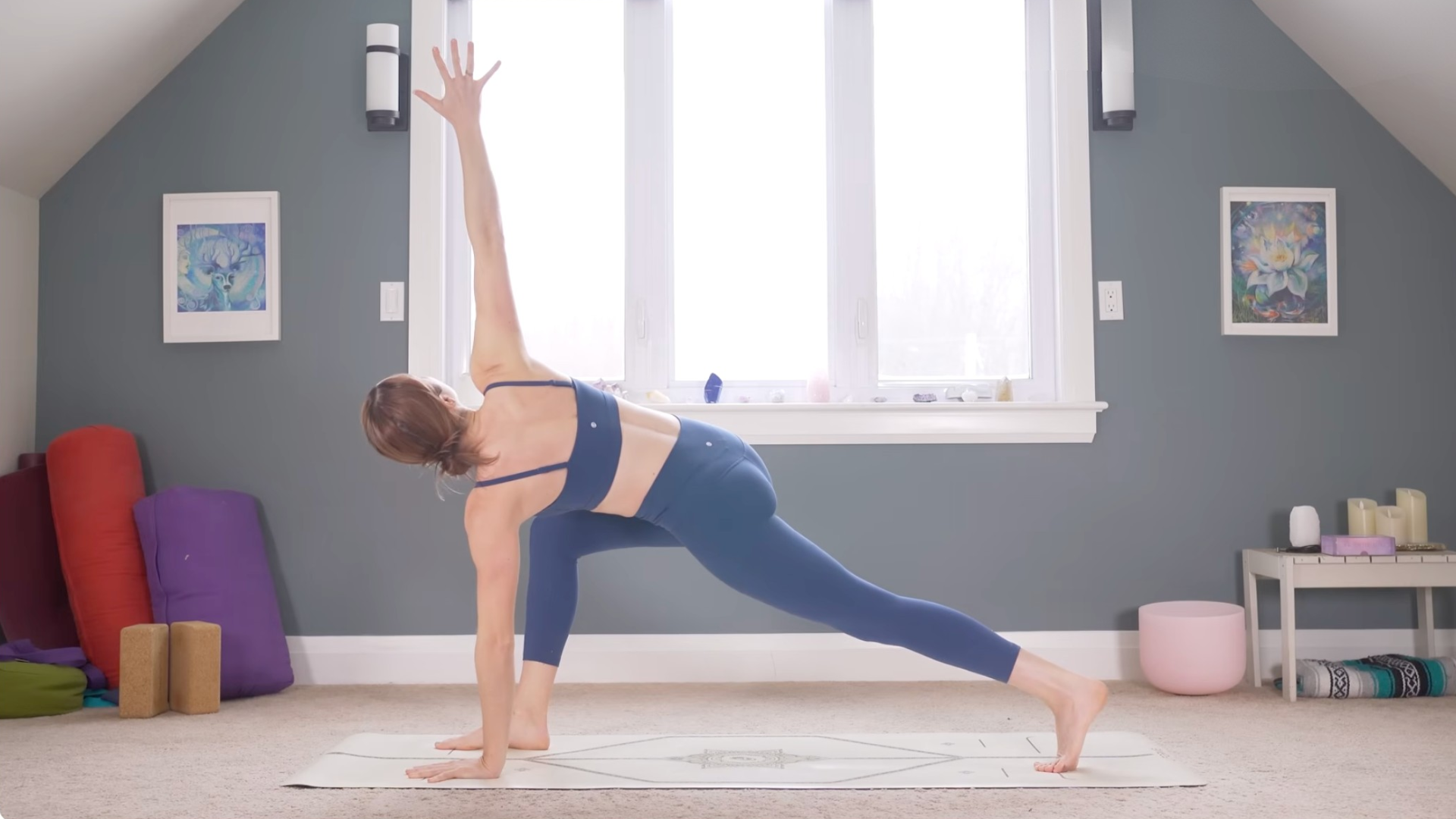
This is what a deep stretch flow looks and feels like in practice. No experience needed — just a mat, your breath, and a willingness to stay. Hit play and let your body lead.
Move without pressure. Let your body lead. ✨
The Deep Stretch Flow: 6 Poses for Focus
Hold each pose for a minimum of 90 seconds — ideally 2–3 minutes. Use your breath as a timer: aim for 10–15 long, slow breath cycles per pose. If your mind wanders, return to the sensation in your body. The stretch is your anchor.
The Breath that Anchors Everything
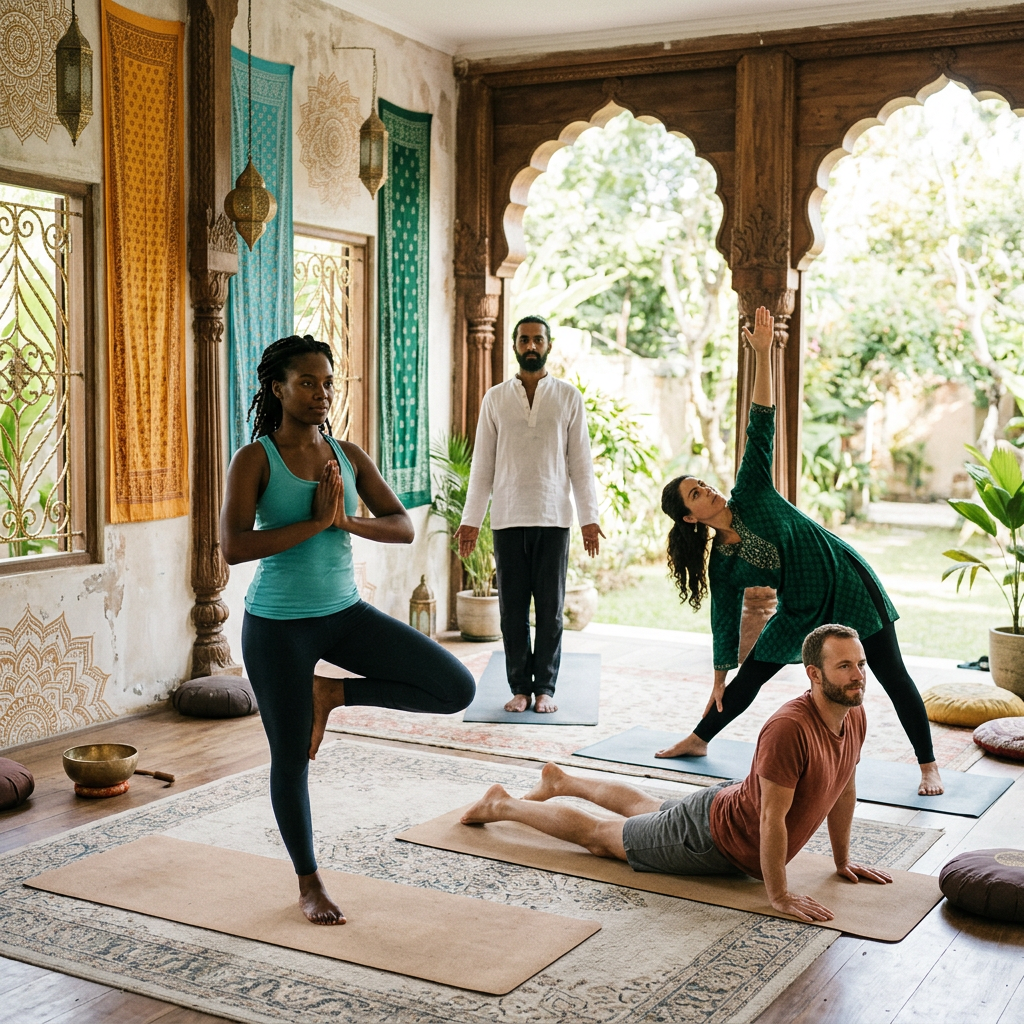
In a deep stretch practice, your breath is not just a background detail — it is the primary tool. Each inhale creates length and space; each exhale deepens the release. The magic formula is simple: never force a stretch on an inhale. Instead, breathe in to prepare, then soften deeper on every exhale. Let your out-breath do the work your muscles want to do.
If you find your breath shortening or becoming choppy during a hold, that is your signal: back off slightly until the breath flows freely again. A tense breath means a tense nervous system, and a tense nervous system cannot focus. The breath quality is always your guide. Smooth breath equals present mind.
Making This a Daily Focus Practice
A deep stretch flow does not need to be long to be transformative. Twenty minutes — three to four poses, held with full attention — is enough to measurably shift your nervous system state and prime your brain for sustained focus. The ideal time is either morning (to set attentional tone for the day) or late afternoon (when cognitive fatigue typically peaks and stretching offers the most relief).
The consistency matters more than the duration. One 20-minute deep stretch practice done five days a week will rewire your attentional baseline more effectively than one two-hour session on the weekend. Think of it less like a workout and more like brushing your teeth — a non-negotiable act of maintenance for your most important instrument: your mind.
🌿 Your Focus & Stillness Check-In
🎥 Watch: Deep Stretch Flow for Focus with Yogaendless
You have read about it. Now let your body experience it. This guided deep stretch flow will walk you through every hold, every breath, every moment of stillness — no guesswork, no rushing, just presence.
Move without pressure. Let your body flow without force.
Explore more guided practices with Yogaendless.
Explore the Full Yogaendless Library
Hundreds of guided practices. Every level. Every mood. All in one place.
Visit Yogaendless →Stillness is not the absence of movement. It is the presence of attention. Every time you unroll your mat and choose to slow down — to hold a little longer, breathe a little deeper, stay a little more fully — you are not just stretching your body. You are expanding the quiet space inside you where your best thinking, your clearest seeing, and your most focused self already live.