
Yogaendless News & Events
Why Dunagiri Is the Heart of Rooted 2.0
The Himalayan village behind our five day immersion, and why the ground beneath your mat matters as much as the practice itself.
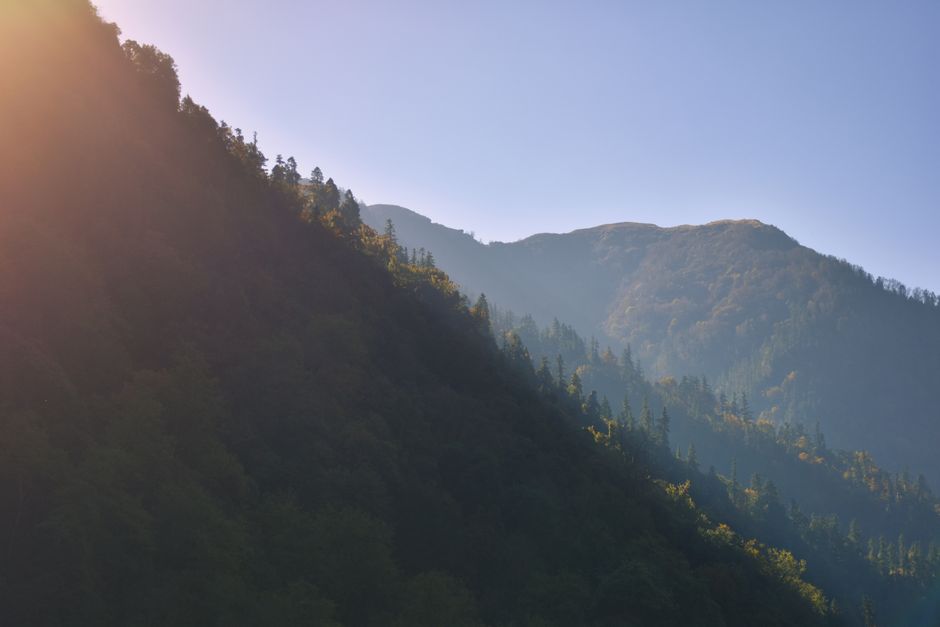
Rooted 2.0 is not set in just any hill station. It is set in Dunagiri, a small cluster of Himalayan villages in Uttarakhand that yogis have quietly travelled to for over a century and a half. Before we walk you through the five days, it helps to understand why this particular patch of the Kumaon Himalayas was chosen at all.
In this article
Key takeaways
- Dunagiri is widely regarded as the birthplace of modern Kriya Yoga, where Mahavatar Babaji is said to have initiated Lahiri Mahasaya in 1861.
- Rooted 2.0 runs 25 to 29 November 2026, guided throughout by Anjali Pandey, with prices starting from ₹50,000.
- The retreat weaves visits to sacred sites, including Mahavatar Babaji’s cave and the Neem Karoli Baba temple, directly into the daily rhythm.
- Early bird pricing closes on 20 August, and a 40% deposit secures your spot.
A Himalayan village with an ancient pull
Tucked into the Kumaon Himalayas of Uttarakhand at around 8,000 feet, Dunagiri is actually a cluster of six small villages, not a single town. Dunagiri is known as the birthplace of modern day Kriya Yoga, and pilgrims and Kriya yogis from many lineages still visit today. Long before yoga brought travellers here, the region carried its own layer of legend, believed by many to be connected to the story of King Bharat, after whom India takes its Sanskrit name, Bharatvarsh.
It is a place that has drawn sages and seekers for generations, not for its scenery alone (though the pine forests and mountain views are genuinely striking) but for something quieter: a sense that stillness comes more easily here.
The cave where Kriya Yoga was reborn
The specific reason Dunagiri holds this reputation traces back to one moment in 1861. Kriya Yoga, as it is practised today, is described by its practitioners as an ancient system revived in modern times when the guru Mahavatar Babaji initiated his disciple, Lahiri Mahasaya, into the practice. Many who follow the Kriya lineage trace their practice back to that transmission, and the small cave associated with it, near the village of Kukuchina, remains a living pilgrimage site.
You do not need to be a Kriya practitioner to feel the significance. Even for those coming to Rooted 2.0 purely for asana and rest, walking through a landscape this steeped in intention tends to shift how the week feels.
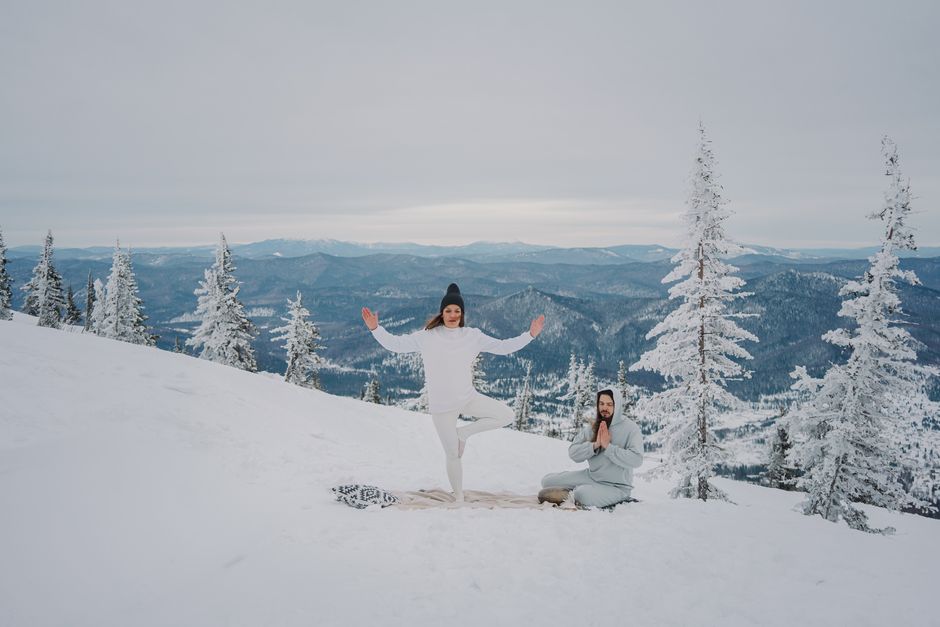
Practical tip: Dunagiri mornings in late November can dip close to freezing even though afternoons stay mild, so pack layers, a warm hat and thermals for early outdoor meditation and pranayama sessions.
Sacred sites woven into your five days
Rooted 2.0’s afternoons are built around exactly this kind of exploration. The itinerary includes visits to Mahavatar Babaji’s cave, the Neem Karoli Baba temple, and time in a dedicated meditation pyramid on site, alongside nature walks and hikes through the surrounding hills. None of this is presented as sightseeing tacked onto a yoga schedule. It is designed as part of the immersion itself, alongside daily asana, meditation, pranayama, cleansing kriyas, a yoga anatomy lesson, and evenings built around storytelling, creative expression, and quiet reflection.
Why the setting itself is part of the practice
There is a reason retreats built around remote, natural settings tend to feel different from a regular week of classes at home. Research on nature immersion, including a systematic review and meta-analysis published in Frontiers in Psychology, has found that exposure to natural environments is associated with measurable stress recovery and emotional benefits. Separate research on nature immersion in workplace settings, published via the National Center for Biotechnology Information, has linked time in natural settings with lower stress-related markers such as cortisol.
None of this means a retreat will resolve stress on its own, and it is not a substitute for medical or psychological care if you are managing a diagnosed condition. But it does help explain why so many people describe retreats like this as feeling different from an ordinary holiday: the setting itself is doing some of the work.
“When students ask why we go all the way to Dunagiri instead of somewhere closer to Mumbai, I tell them: because some places quiet the mind before you even sit down. I want that for you. I want you to feel what I feel every time I’m there.”
— Anjali Pandey, Founder & Lead Teacher, Yogaendless
What five days at Rooted 2.0 actually look like
Mornings begin in a glass-walled yoga shala looking straight into the pines, moving from asana into meditation and pranayama. Midday brings cleansing kriyas, the anatomy lesson, and satvic meals made from farm-fresh, local ingredients. Afternoons open into the hills, nature walks, hikes, and the sacred site visits mentioned above. Evenings slow down further, with storytelling, creative expression, and quiet time in the meditation pyramid as the light fades, before the day closes in silence and reflection.
Stay is at a cosy boutique property with both Standard and Suite rooms, each available as twin sharing or private. Suite occupancy is limited, so if privacy and extra space matter to you, it is worth deciding early.
Good to know before you book
- Dates: 25 to 29 November 2026
- Guided by: Anjali Pandey
- Starting from: ₹50,000 per person
- Early bird pricing: valid until 20 August, standard rates apply from 21 August
- To reserve: a 40% deposit secures your place
- Included: stay, all meals, all yoga and meditation sessions, group activities and workshops, the Babaji’s Cave excursion, temple visits, trek, and the meditation pyramid experience
- Not included: travel to Dunagiri and airport or train transfers (available as an add-on), and personal expenses
Frequently asked questions
How do I get to Dunagiri?
By air, the nearest airport is Pantnagar, about an hour from Delhi and roughly two hours forty five minutes from Mumbai, followed by a scenic five hour drive. By train, Kathgodam is the nearest station, around four hours by road from there. You can also drive from Delhi, a nine to ten hour journey through scenic hill towns, with overnight buses also available.
What’s actually included in the price?
Your stay, all meals, all yoga and meditation services, group activities and workshops, the Babaji’s Cave excursion, temple visits, the trek, and the meditation pyramid experience. Travel to Dunagiri and personal expenses are not included, and transfers are available as an add-on.
Do I need to be an experienced yogi to join?
No prior experience is required. The retreat is designed to meet you where you are, whether this is your first extended immersion or you have practised for years.
What’s the difference between Standard and Suite rooms?
Both are available as twin sharing (per person) or a private room. Suite rooms offer more space and are limited in number, so early booking is recommended if that’s your preference.
How does payment work?
A 40% deposit reserves your spot. Early bird pricing is valid until 20 August, after which standard rates apply.
Rooted 2.0 is, in the end, a chance to practice somewhere the practice itself began. If that pulls at you even a little, it’s worth a closer look.
Watch a few recent sessions from our channel before you go:

🧠 Brain hack for this stretch Technique

Drills for your inversion Pincha

If you are struggling with really tight Hamstrings
Yogaendless is an online yoga studio led by Anjali Pandey, offering live group classes, private coaching, on-demand flows, corporate sessions, and retreats like Rooted 2.0, with a physical home at Loft 52, Bandra, for anyone who wants to build strength, flexibility and calm, whatever their starting point.