Beginner Yoga
Why Your Yoga Practice Plateaus (And What Actually Breaks Through It)
If it feels like you haven’t improved in months, you’re not doing anything wrong. You’re right on schedule.

In this article
Key takeaways
- Plateaus are a normal, well-documented stage of skill learning, not a sign you’ve stopped improving or done something wrong.
- They typically happen once a skill becomes “automatic,” which paradoxically makes further conscious improvement harder without a deliberate change.
- What breaks a plateau isn’t more repetition of the same practice, it’s varied, targeted challenge just past your current comfort zone.
- Feedback from a teacher is one of the most reliable ways to see what’s actually holding you back, since it’s hard to spot from inside your own practice.
You were improving steadily for months. New poses kept opening up, your practice kept feeling different each week. And then, somewhere around month four or five, it just… stopped. Same poses. Same sticking points. Same slightly frustrating sameness, week after week. If that’s where you are, here’s the good news: it’s not a sign anything’s wrong.
The specific frustration of a plateau
Plateaus are especially frustrating because they follow a period of visible, rewarding progress, which makes the sudden stall feel like a step backward rather than what it actually is. Losing that regular sense of “getting better” can chip away at motivation fast, and it’s one of the most common points where people quietly stop practicing altogether.
Why plateaus happen, according to skill-learning research
This isn’t unique to yoga. Skill acquisition across very different domains, language learning, sports, music, martial arts, follows a strikingly similar pattern: rapid early gains, followed by a stall once the basics become second nature. Research on motor skill learning describes distinct stages of skill acquisition, with rapid gains in the early stage as the brain establishes the basic movement patterns, followed by a much slower rate of improvement as those patterns become more automatic.
In other words, your practice isn’t failing to progress. It’s transitioning from effortful, conscious learning into something closer to muscle memory, and that transition is exactly where visible progress naturally slows down.
Quick tip: A plateau in yoga often means you’ve moved from “actively thinking through” a pose to performing it automatically. That’s genuine progress, even though it doesn’t feel like it in the moment.
The three stages your practice moves through
1. Cognitive
You’re consciously learning the basics, alignment, breath, sequencing. Progress feels fast because everything is new.
2. Associative
You start combining pieces into a flow, refining and weeding out major mistakes. Growth is steadier, but still visible.
3. Autonomous
The basics become automatic, requiring less conscious effort. This is where most plateaus happen, right on schedule.
What actually breaks through a plateau
Repeating the exact same sequence you’ve always done rarely moves you forward once you’ve hit this stage, your body has already mastered it. What research on skill learning consistently points to instead is deliberate, targeted challenge: practicing just beyond your current comfort zone, varying the difficulty and context of what you’re doing, rather than repeating the familiar on autopilot.
For a yoga practice specifically, that might mean holding a familiar pose longer than feels automatic, slowing down a transition you usually rush through, or working a variation that exposes exactly where your current limit actually is.
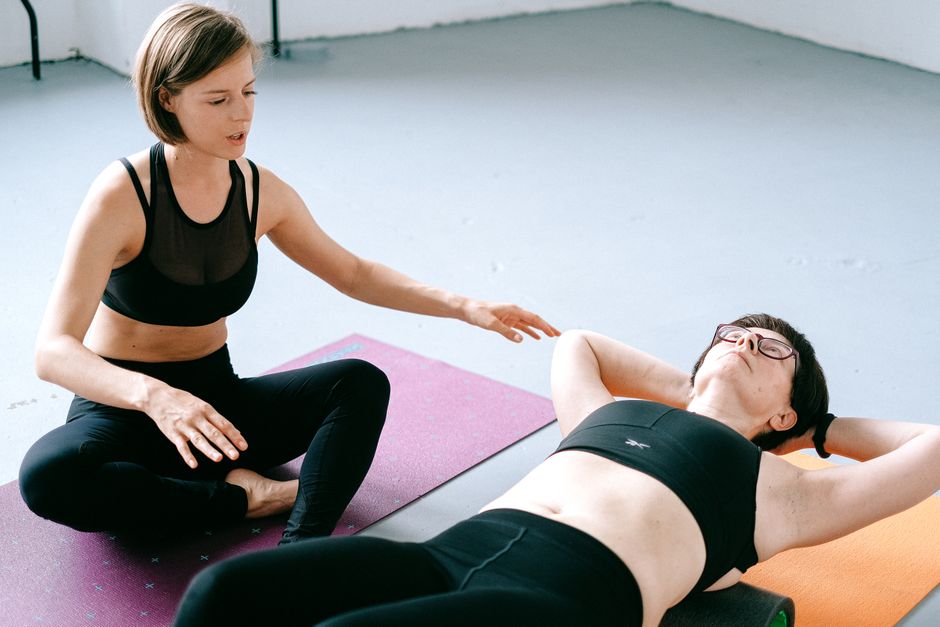
“Almost every plateau I see in students comes down to the same thing: their body has quietly mastered their comfortable range, and nothing in their regular practice is asking anything new of it. The fix is rarely ‘try harder.’ It’s usually ‘try something specific and different.'” — Anjali Pandey, Founder, Yogaendless
Why plateaus are hardest to break alone
Here’s the honest catch: identifying exactly what’s holding a specific plateau in place is genuinely hard to do from inside your own practice. A hip that isn’t opening might be about the hip itself, or it might be about a compensation pattern somewhere else entirely, something that’s very difficult to self-diagnose in a mirror or a video call gallery view.
This is one of the clearest cases where outside feedback matters. A teacher who can watch your specific pattern, not a generic sequence, but your actual sticking point, can usually spot in one session what months of solo repetition won’t reveal on its own.
How Yogaendless helps you move past it
If you’ve been steady in group classes or on-demand lessons and feel that familiar stall, a private session with a Yogaendless coach is often the fastest way through it, targeted, one-on-one attention on exactly where your practice has plateaued, rather than a generic next-level sequence.
Stuck in the same place for months?
A private session can pinpoint exactly what’s holding your practice back, and what to actually do about it.
Explore Private CoachingFAQ
How long do yoga plateaus usually last?
It varies widely by individual and practice frequency, but plateaus are a normal, temporary stage of skill learning rather than a permanent stopping point.
Does a plateau mean I’m not practicing enough?
Not necessarily. Plateaus often happen precisely because a skill has become automatic, more repetition of the same routine typically isn’t what moves it forward.
Should I switch styles entirely if I’m stuck?
Not necessarily a full switch, but introducing variation, new sequencing, longer holds, unfamiliar transitions, tends to be more effective than repeating the same familiar flow.
Can a plateau happen even if I’m doing everything “right”?
Yes. Plateaus are a normal part of skill development, not a sign of doing something wrong, they typically follow a period of genuine, hard-won progress.
Is one private session really enough to help?
Often a single focused session is enough to identify what’s actually holding a specific plateau in place, giving you a clear, targeted practice to work with afterward.
Here’s a practice designed to push past a familiar comfort zone:
Yogaendless is an online yoga studio led by Anjali Pandey, offering live group classes, private coaching, on-demand flows, corporate sessions, and retreats, with a physical home at Loft 52, Bandra, for anyone who wants to build strength, flexibility and calm, whatever their starting point.