
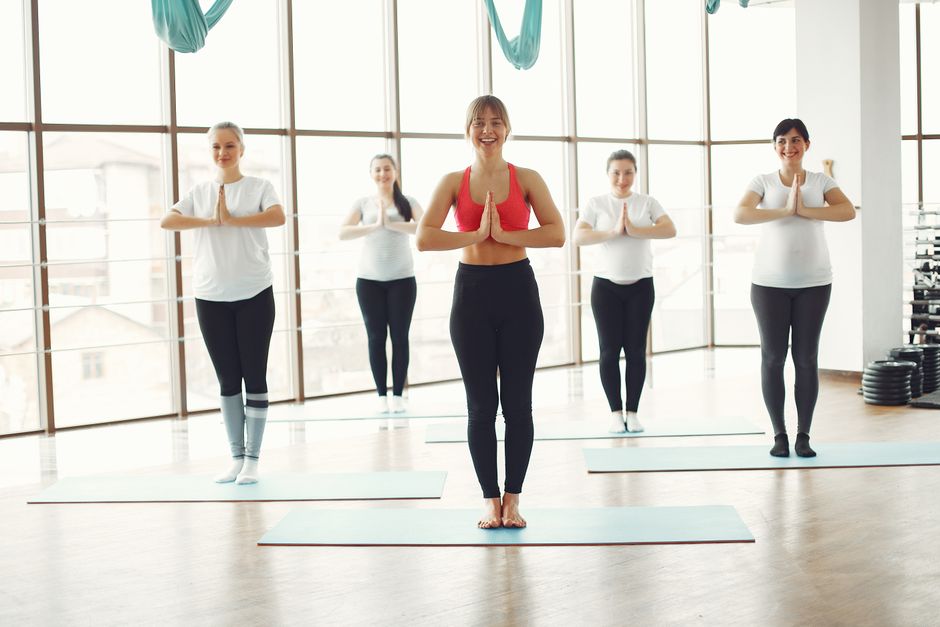
You’ve probably noticed it yourself: the exact same sequence feels different depending on whether you’re moving through it alone in your living room or alongside a room full of other people. That’s not just in your head. There’s a growing body of research on why shared, synchronized movement changes both how hard something feels and how connected we feel to the people doing it with us.
In this article
Key takeaways
- Practicing around other people can shift your motivation from something you have to do into something you want to do, which research links to better long-term consistency.
- Studies on synchronized movement, like rowing in time with a crew, have found it raises pain thresholds and deepens feelings of connection more than the same effort done alone.
- Solo practice still has real advantages: full control over pace, no comparison, and space for personal focus.
- Group settings tend to increase attendance and reduce drop-out, since accountability and shared rhythm make it easier to stay consistent.
- A retreat amplifies this effect further, since you’re moving in sync with the same group, day after day, not just for one class.
Why other people change your motivation
Writing for The Conversation, psychology and kinesiology researchers explained that being around other people who exercise shapes both your attitudes toward it and your sense of whether it’s something you “should” be doing, a concept researchers call social norms. More importantly, group settings tend to boost intrinsic motivation, the kind where you do something because it’s genuinely enjoyable rather than because you feel obligated to. That distinction matters because intrinsically motivated habits are far more likely to stick.
The same researchers point out that people who feel more connected to their exercise class tend to attend more consistently, show up on time, and are less likely to quit altogether, especially compared to people going it alone. If you’ve ever found it easier to show up for a scheduled class than to convince yourself to unroll your mat solo, this is likely part of why.
Tip: If you’re someone who struggles to stay consistent with a home practice, try anchoring one or two sessions a week to a live group class instead of a recording. The scheduled, shared time tends to be easier to protect.
The surprising science of moving in sync
There’s also something happening at a more physical level when people move together in rhythm. A well-known study published in Biology Letters found that rowers training in synchrony with their crew showed a significantly greater increase in pain threshold, a standard way of measuring endorphin release, compared to the same training done alone. The researchers suggested this heightened effect may explain the sense of collective euphoria people report during other synchronized group activities, including dance and music-making.
A follow-up study on synchronized dance, summarized by researchers at InfoFit, found that both physical exertion and synchrony independently raised pain thresholds and increased feelings of bonding within the group. None of this research was done on a yoga mat specifically, but the mechanism, moving in a shared rhythm with others, applies just as much to a room flowing through sun salutations together as it does to a rowing crew or a dance floor.
Where solo practice still wins
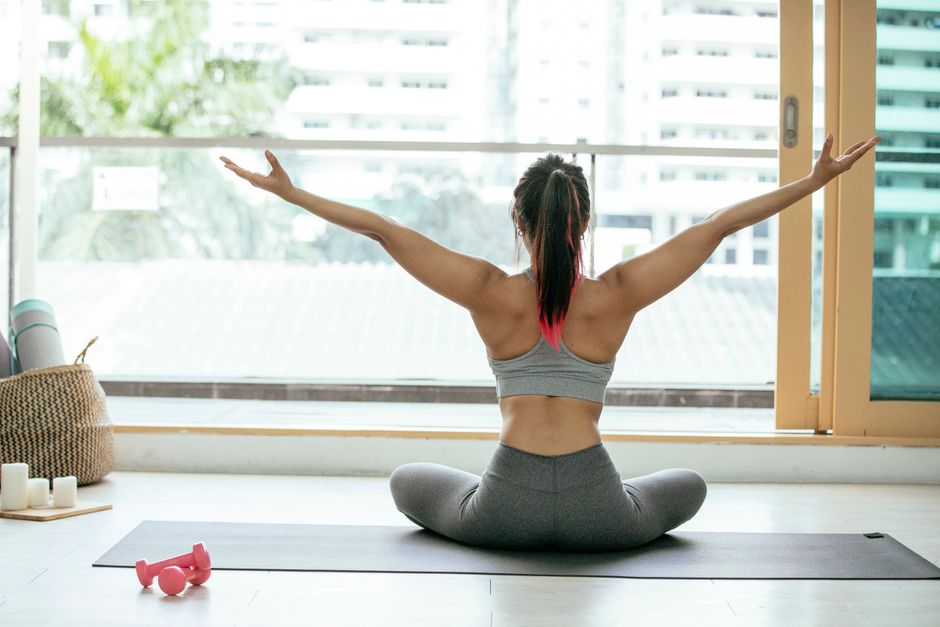
None of this means solo practice is worse, it’s simply solving a different problem. Practicing alone gives you full control over pace, sequencing, and focus, with no comparison to anyone else in the room. For people who find groups distracting, or who want to work through something specific at their own speed, solo sessions can offer a kind of mental clarity that’s harder to access in a class.
Many experienced practitioners actually use both: group sessions for motivation, accountability, and that collective energy, and solo sessions for refining technique or working through a personal focus without any outside pressure.
I can always tell the difference in a room when everyone’s breathing starts to line up. There’s a kind of quiet permission that happens, people push a little further, hold a pose a little longer, not because anyone’s competing, but because everyone’s in it together. You don’t get quite the same thing practicing alone, and that’s okay, they’re just different experiences.
— Anjali PandeyWhat this looks like at scale, in a retreat setting
If a single group class can shift motivation and deepen the physical experience of practice, a multi-day retreat tends to amplify that effect simply through repetition. You’re not moving in sync with a room for one hour, you’re doing it every morning and evening for several days in a row, with the same group of people. That kind of sustained, shared rhythm is exactly the setup researchers point to when explaining why group synchrony boosts bonding and consistency.
This is very much part of the experience we’re building into Rooted 2.0, our upcoming retreat in Uttarakhand. Beyond the setting and the schedule, a meaningful part of what makes a retreat feel different is simply practicing alongside the same group, day after day, and watching that shared rhythm build into something more than the sum of its parts.
Frequently asked questions
Is group yoga better for beginners than practicing alone?
Not necessarily better, but often easier to stick with. Group settings tend to boost motivation and consistency, which can be especially useful when you’re still building the habit.
Do online group classes offer the same benefits as in-person ones?
Live online classes still provide shared timing, a sense of accountability, and a collective rhythm, even without being in the same room. Research on group exercise generally focuses on the social and motivational effects, which can carry over to a live virtual setting reasonably well.
Why do I sometimes push harder in a group class than I would alone?
Research on synchronized movement suggests that moving in rhythm with others can raise pain thresholds and reduce perceived effort, which may explain why a pose or sequence can feel more manageable in a group setting.
Should I stop practicing alone if group classes work better for me?
Not at all. Solo practice offers real benefits like full control over pace and space for personal focus. Many people benefit most from a mix of both rather than choosing one exclusively.
Want to feel the group energy for yourself? Take a look at a recent class.


About Yogaendless
Yogaendless is an online yoga studio led by Anjali Pandey, offering live group classes, private coaching, on-demand flows, corporate sessions, and retreats, with a physical home at Loft 52, Bandra, for anyone who wants to build strength, flexibility, and calm, whatever their starting point.