
In This Article
Key Takeaways
- Backbends should feel challenging, not painful. Pain usually means the bend is collapsing into the lower back instead of moving through the whole spine.
- A gentle posterior pelvic tilt, engaging the core, and lengthening before arching are the three habits that make backbends safer.
- Props like blocks and straps aren’t a beginner shortcut, they’re a legitimate tool used at every level.
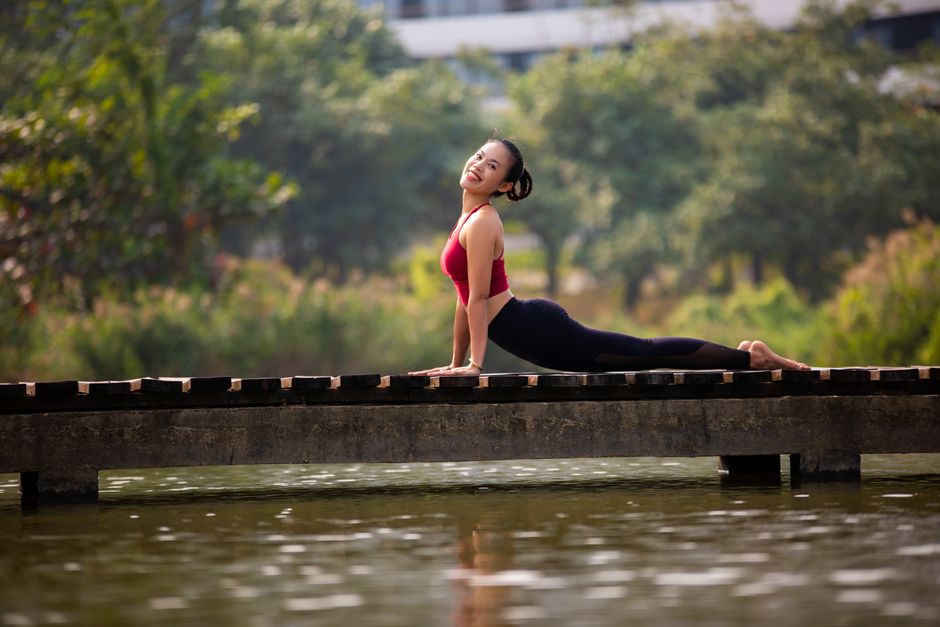
Backbends should feel challenging but comfortable, never sharp or painful in the lower back. If yours don’t feel that way yet, it’s almost always a fixable alignment issue, not a sign your body isn’t built for backbending. Here’s how to build the skill safely, without rushing or forcing anything.
Why backbends feel scary in the first place
Most of us spend our days hunched forward, over laptops, phones, steering wheels, so backbends ask the body to move in a direction it rarely goes. That unfamiliarity alone can trigger a bit of nervousness, separate from any actual risk. On top of that, backbends open the chest, which many teachers describe as an emotionally vulnerable position, not just a physically demanding one.
Tip: If backbends bring up more anxiety than excitement, that’s common, not a flaw. Slowing down and starting with the gentlest variation of a pose is a completely valid way to build trust with your own spine.
The most common mistake: dumping into the low back
The single biggest cause of backbend discomfort is what teachers call “dumping” into the lumbar spine, letting the lower back absorb the whole arch instead of distributing it evenly through the entire spine. When this happens, the sensation usually isn’t a pleasant stretch, it’s a pinch or ache in the low back. According to Yoga Basics, the safer approach is to lengthen the spine first, then initiate the arch from the upper and mid-back rather than the lower back, letting the extension travel evenly rather than concentrating in one vulnerable spot.
A small but powerful fix, taught widely in Iyengar-influenced classes, is a gentle posterior pelvic tilt, curling the tailbone under slightly before you begin to arch. This one adjustment softens the lower back and lets the extension spread through the whole spine instead of concentrating at a single point.

Where to actually start
You don’t need Wheel Pose to build a genuine backbending practice. Gentle backbends like Cat-Cow, Sphinx Pose, and Bridge Pose train the same alignment principles at a much lower intensity, and they’re just as legitimate a part of a regular practice as their deeper cousins.
Cat-Cow is a good place to begin because it moves the spine dynamically between flexion and extension with the breath, building coordination and awareness before you ever hold a static shape. Sphinx Pose, with the forearms grounded, offers a manageable amount of extension while you get familiar with how a healthy backbend should feel.
Tip: Warm up your hip flexors and chest before any backbend. Tight hips often force the lower back to overcompensate, so a few rounds of gentle hip openers beforehand can make a backbend feel noticeably easier.
Using props without guilt
Blocks and straps aren’t a beginner workaround, they’re used by advanced practitioners too, to fine-tune alignment and reduce unnecessary strain. A strap looped around the ankles in Bridge Pose variations, for instance, can help the shoulders soften and the chest lift more naturally than forcing a bind with the hands.
If a pose asks you to clasp your hands behind your back and that feels like too much, a strap or block bridges the gap without asking your shoulders to do something they’re not ready for yet.
Why your breath matters more than your depth
Holding your breath during a backbend is one of the clearest signs that you’ve gone past your current edge. A steady, even breath throughout the pose is a better gauge of readiness than how deep the arch looks. If you notice your breath getting shallow or held, that’s useful feedback to soften the pose slightly, not a signal to push harder.
Backbends are also part of what BENDY builds toward gradually, alongside plank holds and sun salutations, precisely because a rushed backbend practice tends to create the very fear it’s trying to move past.
“I tell my students, a backbend is not a test of how far you can go. It’s a conversation with your spine. The moment you stop breathing is the moment you stop listening.”
— Anjali Pandey
Frequently Asked Questions
Is it normal to feel scared before a backbend?
Very normal. Chest-opening poses can feel emotionally vulnerable as well as physically unfamiliar, and that mix often shows up as nervousness.
Why does my lower back hurt in backbends?
This usually means the bend is concentrating in the lumbar spine instead of moving through the whole back. A gentle pelvic tilt and core engagement often resolve this.
Do I need to be flexible to start practicing backbends?
No. Gentle poses like Cat-Cow, Sphinx and supported Bridge build the same skills at a manageable intensity, regardless of your current flexibility.
Are backbends safe for everyone?
Most people can practice backbends safely with good alignment, though those with spinal stenosis, spondylolisthesis, or other spine conditions should check with a doctor or an experienced teacher first.
How do I know if I’m ready for a deeper backbend?
If gentler variations feel comfortable, not painful, and your breath stays steady throughout, that’s a reasonable sign you can explore a bit more depth, ideally with guidance.
Backbends reward patience more than any other pose family. Build the habit slowly, and the fear tends to fade well before the flexibility fully arrives.
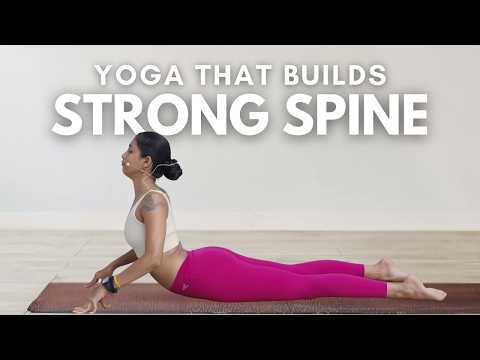
Want a gentle, guided introduction to backbends? Here are a few of our latest videos.


About Yogaendless
Yogaendless is an online yoga studio led by Anjali Pandey, offering live group classes, private coaching, on-demand flows, corporate sessions, and retreats, with a physical home at Loft 52, Bandra, for anyone who wants to build strength, flexibility and calm, whatever their starting point.