Retreats
Can You Really “Reset” in Just 5 Days? What the Research Says
A fair, honest look at what science actually says about short retreats, not just what the brochures claim.

In this article
Key takeaways
- Multiple peer-reviewed studies show measurable reductions in stress and anxiety after retreats lasting 3 to 5 days.
- One randomised controlled trial found a single short break produced large, immediate improvements in stress and wellbeing that were still detectable a month later.
- Retreats tend to outperform ordinary vacations of similar length because of their structured practice, not just the change of scenery.
- Longer retreats (7 to 10+ days) can offer additional benefits, but 5 days is genuinely enough to produce a measurable shift, not just a placebo effect.
It’s a fair question, and one worth asking honestly before you spend five days and real money on a retreat: does this actually work, or is it just a nice week away with better marketing? The research, and there’s more of it than you’d expect, gives a fairly clear answer.
The skeptical question, addressed head-on
Five days doesn’t sound like much. It’s less than a week of annual leave for most people, and it’s reasonable to wonder whether that’s enough time for anything to genuinely shift, or whether you’ll just come home relaxed for a day or two before it fades. So let’s look at what’s actually been measured, rather than what’s been promised.
What the research actually shows
A 5-day residential mindfulness programme (2021)
Researchers evaluated a 5-day residential programme designed to reduce stress and improve mental health outcomes in students experiencing moderate to high stress, comparing an indoor and outdoor version against a control group in a randomised controlled trial.
Source: Frontiers in Psychology, via PubMed
A 3-day mindfulness retreat and biological stress markers (2021)
Participants in a 3-day residential retreat showed a significant reduction in stress and anxiety levels, alongside measurable shifts in salivary cortisol and inflammatory markers, with cortisol levels significantly correlated to how anxious and stressed participants reported feeling.
Source: Psychoneuroendocrinology, ScienceDirect
A single short vacation and workplace stress (randomised controlled trial)
A single short break away from a usual environment produced large, immediate improvements in perceived stress, recovery, and wellbeing among middle managers, with effects still detectable 30 to 45 days later.
Source: International Journal of Environmental Research and Public Health
Quick tip: None of this research promises a permanent transformation from one trip. What it shows is a genuine, measurable reset, a real starting point you then get to build on.
Why retreats tend to outperform ordinary breaks
A meta-analysis of meditation retreats found consistent, large improvements in anxiety, depression, and stress, along with self-reported mindfulness and compassion, both compared to before the retreat and against control groups, with effects still apparent at follow-up. Notably, that same research found no meaningful difference in outcomes based on retreat duration, what mattered more was the structured practice itself, not simply how many days you were away.
Separate research directly comparing meditation retreats to ordinary vacations found that while both improve wellbeing in the short term, the structured practice built into a retreat setting tends to make the improvements more durable, not just a temporary high from being somewhere new.
The honest caveat: longer isn’t nothing
In the interest of a fair answer: some research does suggest that longer programmes, in the range of 7 to 10 days or more, can allow additional time for stress hormones to normalise and new habits to take hold. That’s worth knowing. A 5-day retreat isn’t going to rebuild your entire nervous system from the ground up, and nobody selling you one honestly should claim it does.
What it will do, based on the studies above, is produce a real, measurable dip in stress and anxiety and a real, measurable rise in wellbeing, the kind that gives you something solid to build from, rather than five days of pleasant distraction that evaporates the moment you’re back at your desk.
“I never promise people a permanent fix in five days. What I promise is that something real will shift, real enough to feel, real enough to measure, and real enough to build a habit on once you’re home.” — Anjali Pandey, Founder, Yogaendless
What this means for a 5-day retreat
Put simply: five days is long enough to matter, backed by controlled research, not just testimonials. It’s not a magic reset that erases months of accumulated stress permanently. It’s a genuine, evidence-backed intervention that gives your nervous system real relief and gives you something concrete to carry forward, which is exactly the honest promise a retreat should make.
Where Rooted 2.0 fits in
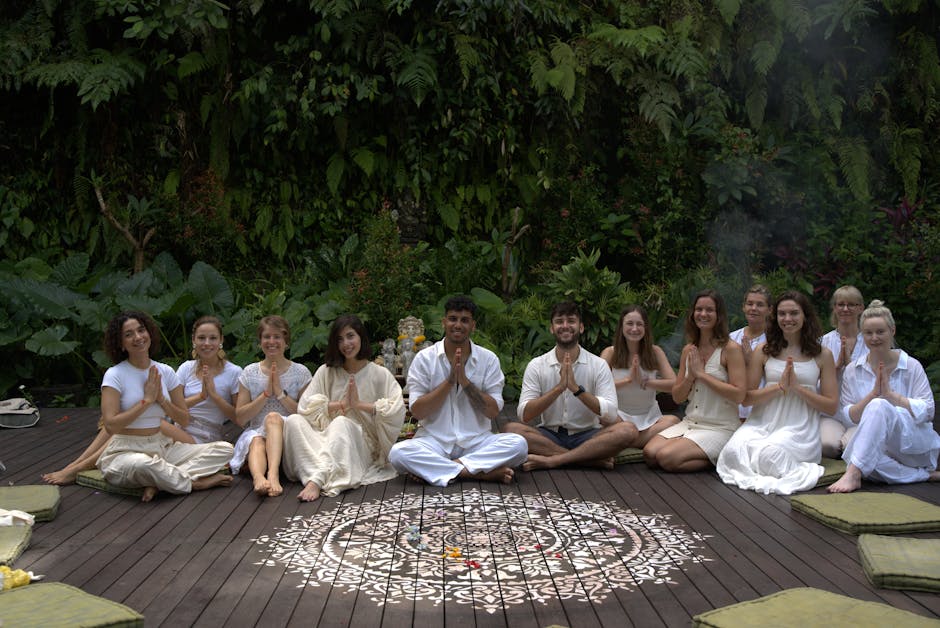
Rooted 2.0 is five days in Dunagiri, Uttarakhand, structured around daily asana, meditation, pranayama, and satvic meals, the same combination of consistent practice and removal from daily stressors that the research above points to. Guided by Anjali Pandey.
Five days, backed by more than good intentions
Join Rooted 2.0 for a retreat built on real, structured practice. Early bird pricing is open until 20 August.
Explore Rooted 2.0FAQ
Is 5 days really long enough for a retreat to work?
Yes, according to multiple peer-reviewed studies, 3 to 5 day residential programmes have produced measurable reductions in stress, anxiety, and cortisol levels, though longer programmes may offer additional benefits.
How long do the effects of a short retreat actually last?
Research on short breaks has found measurable improvements in stress and wellbeing still detectable 30 to 45 days later, though results vary by individual and by how well the habits are maintained afterward.
Is a retreat better than a regular vacation for stress relief?
Studies comparing the two suggest retreats with structured practice tend to produce more durable improvements than ordinary vacations of similar length, largely due to the practice itself rather than just the change of scenery.
Do I need meditation experience for the research to apply to me?
No. Several of the cited studies specifically involved participants with little or no prior meditation experience, and still found measurable benefits.
What happens after the 5 days, does the reset just fade?
It can, if nothing is done to maintain it, which is why integration and small daily practices after the retreat matter as much as the retreat itself.
Here’s what structured daily practice actually looks like:
Yogaendless is an online yoga studio led by Anjali Pandey, offering live group classes, private coaching, on-demand flows, corporate sessions, and retreats, with a physical home at Loft 52, Bandra, for anyone who wants to build strength, flexibility and calm, whatever their starting point.