
Gentle Hip Opening Yoga for Emotional Release and Deep Relaxation
The hips are often described as a quiet storage space for unprocessed emotions, long-held tension, and the residue of everyday stress. When movement slows and attention softens, this area has a natural ability to release what the mind may not even remember holding.
This gentle fifteen-minute practice offers a safe and supportive space to explore hip mobility with patience, curiosity, and emotional awareness. The pace remains unhurried, allowing the nervous system to feel secure enough to let go.
Grounding Through Seated Awareness
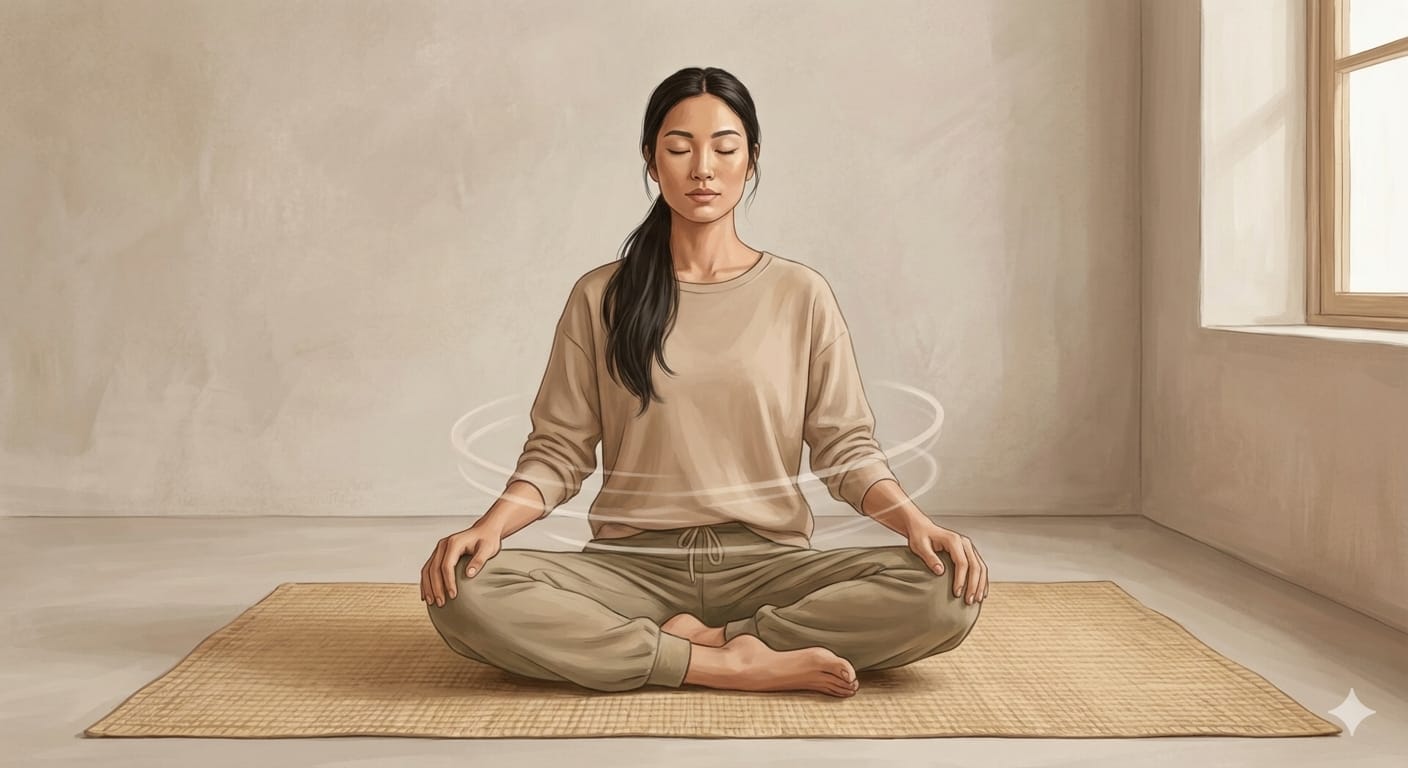
The practice begins in a seated position, using slow hip circles to gently introduce movement. These circular motions awaken the pelvic region while encouraging a sense of grounded presence. Intention setting at this stage becomes a mental anchor, reminding the body that it is safe to soften.
Supine Hip Opening and Safety
Lying on the back allows the spine to relax completely, removing unnecessary muscular effort. Knee-to-chest movements and gentle knee circles help massage the hip joints while keeping the lower back supported. The butterfly variation invites the inner thighs to relax without force, promoting passive release.
Dynamic Circles and Emotional Flow
Moving into tabletop introduces larger hip circles that feel almost playful in nature. These movements stimulate circulation while encouraging emotional fluidity. The lizard pose variation deepens sensation, yet remains adaptable, reinforcing the idea that choice is empowerment.
Cooling Down and Integration
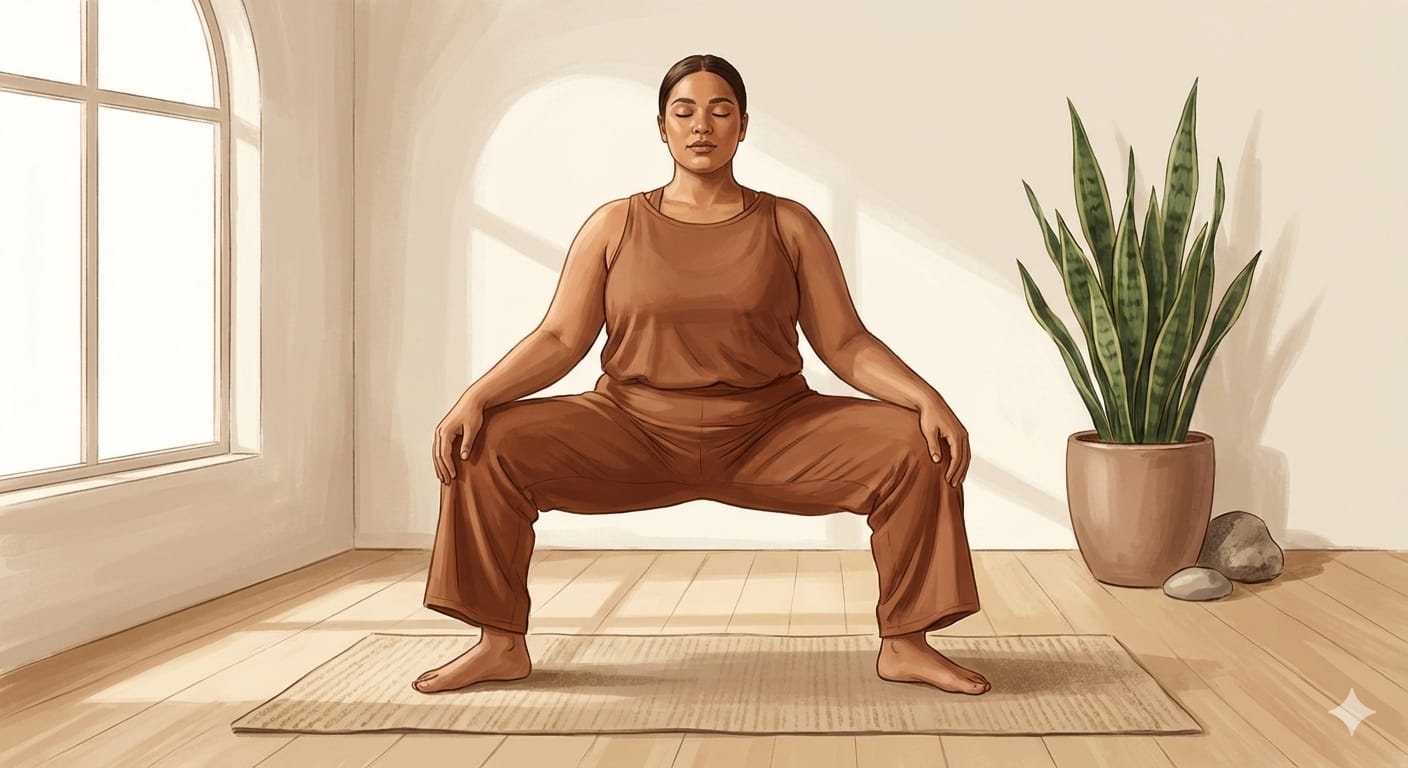
Child’s pose offers a final resting space where the hips can fully surrender. The body absorbs the effects of the practice while the mind experiences a quiet sense of completion. Rest becomes not inactivity, but a form of integration.
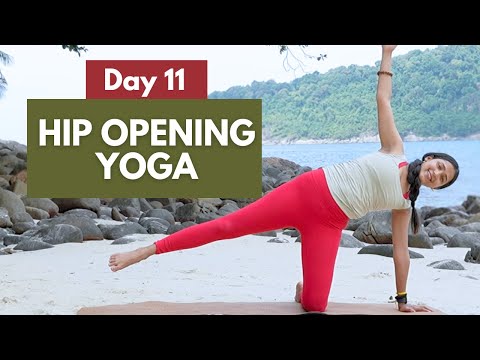
Tap to practice this gentle hip-opening yoga flow and allow the body to release at its own pace.
Begin the practice