Beginner Yoga
Kriya Yoga vs Hatha Yoga: What’s the Real Difference?
Hatha yoga works mainly through the body, while kriya yoga works mainly through the breath and mind, though the two overlap more than most people expect.

In this article
Key takeaways
- Hatha yoga is a physical practice built on postures (asanas), and it’s the foundation most modern yoga styles come from.
- Kriya yoga is a meditative practice built on breath, mantra, and specific inner techniques, historically taught only after some preparation.
- Most practitioners eventually use both, hatha to prepare the body, kriya to go deeper into stillness.
- Kriya yoga’s modern revival traces back to the Himalayas, specifically Dunagiri in Uttarakhand.
If you’ve been practicing yoga for a while, you’ve probably heard both terms and quietly wondered whether they’re the same thing, competing schools, or completely unrelated. They’re neither. Here’s the plain-language version.
What is hatha yoga?
Hatha yoga is the physical branch of yoga most people encounter first, whether they realise it or not. It’s a foundational branch of yoga that emphasises balance between body and mind through a series of postures (asanas) and breathing techniques (pranayama), with the term combining the Sanskrit words for sun and moon to represent the balance of opposites within the body. Practically speaking, if you’ve taken a beginner-friendly class with poses held for a few breaths at a time, that’s hatha.
Hatha yoga was formally documented in the 15th century in the text “Hatha Yoga Pradipika,” which describes it as a way to prepare the body for prolonged meditation. So even hatha, often thought of as “just the physical stuff,” was always meant to lead somewhere quieter.
Quick tip: If a class description mentions “asana,” “flow,” or “postures” without much else, it’s almost certainly rooted in hatha, whatever fancier name it’s marketed under.
What is kriya yoga?
Kriya yoga is a meditative practice centred on breath control (pranayama), mantra, and specific inner techniques aimed at cultivating stillness and self-awareness, rather than physical fitness. Historically, it was taught only after a period of preparation, and often passed down directly from teacher to student.
Its modern revival has a specific, well-documented origin story. Kriya Yoga was said to have been lost for centuries, then reintroduced in modern times by Mahavatar Babaji, whose disciple Lahiri Mahasaya (1828 to 1895) was the first to teach it openly in the current era. Babaji later asked Lahiri Mahasaya’s disciple, Swami Sri Yukteswar Giri, to train Paramahansa Yogananda and send him to the West to share the technique with the world. That meeting between Babaji and Lahiri Mahasaya is traditionally placed in the Himalayan foothills, in the region around Dunagiri.
Where hatha asks “how does my body feel,” kriya asks “where is my attention right now.” Both are useful questions. They’re just different doors into the same room.
The real difference, side by side
| Aspect | Hatha Yoga | Kriya Yoga |
|---|---|---|
| Primary focus | Physical postures, alignment, strength and flexibility | Breath, mantra, and meditative technique |
| Typical setting | Studio classes, home practice, beginner-friendly | Guided initiation, retreats, ongoing personal practice |
| Best suited for | Anyone starting a physical practice | Practitioners ready to deepen meditation and stillness |
| Where it shows up | Most modern yoga classes worldwide | Retreats, ashrams, and dedicated meditation lineages |

Where they actually overlap
In practice, the line is blurrier than the table above suggests. Most hatha classes already include some pranayama and a short meditation at the end. Most kriya practitioners still need a steady, healthy body to sit comfortably for extended stillness, which is exactly what hatha builds. Traditional hatha texts even include cleansing practices called kriyas, so the two aren’t entirely separate systems, more like two ends of the same spectrum.
This is part of why a well-rounded retreat usually weaves both together: asana in the morning to steady the body, then meditation, pranayama, and kriyas layered in as the day goes on.
“People often ask me if they should ‘switch’ from hatha to something deeper. You don’t switch. The postures are what let you sit still long enough to actually meditate. One prepares you for the other.” — Anjali Pandey, Founder, Yogaendless
Which one should you start with?
If you’re new to yoga entirely, hatha is almost always the right starting point. It builds the strength, flexibility, and body awareness that make longer stillness possible later. If you already have a steady asana practice and find yourself craving more depth, quiet, and inward focus, that’s usually the sign you’re ready to explore meditative practices like kriya, ideally under proper guidance rather than from a video alone.
Quick tip: There’s no rush. Many long-time practitioners spend years in hatha before ever exploring kriya, and that’s not a lesser path, it’s simply a different pace.
Experience both, where kriya yoga began
Rooted 2.0 takes you to Dunagiri, Uttarakhand, revered as the birthplace of modern Kriya Yoga, for five days that combine daily asana, meditation, pranayama, and kriyas, guided by Anjali Pandey. Early bird pricing is open until 20 August.
Explore Rooted 2.0FAQ
Is kriya yoga harder than hatha yoga?
Not harder exactly, but different. Hatha asks effort from the body, kriya asks sustained attention and stillness from the mind, which many beginners find more challenging at first.
Do I need a teacher to learn kriya yoga?
Traditionally, yes. Kriya techniques are typically passed on through direct guidance rather than self-taught from a book or video, especially in the early stages.
Can beginners join a retreat that includes kriya practices?
Yes. Retreats like Rooted 2.0 are designed to introduce kriyas gently alongside asana and meditation, guided step by step, so no prior kriya experience is required.
Is hatha yoga purely physical, with no spiritual side?
Not quite. Hatha yoga was originally designed to prepare the body for meditation, so even a physically focused class is rooted in a larger tradition of stillness.
Why is Dunagiri connected to kriya yoga specifically?
Dunagiri, in the Himalayan foothills of Uttarakhand, is traditionally regarded as the site where Kriya Yoga was passed from Mahavatar Babaji to Lahiri Mahasaya in the 19th century, marking its modern revival.
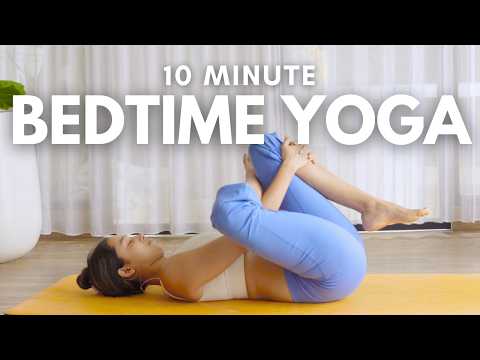
Want to see hatha and meditative practice in action? Here’s what’s new on our channel:


Yogaendless is an online yoga studio led by Anjali Pandey, offering live group classes, private coaching, on-demand flows, corporate sessions, and retreats, with a physical home at Loft 52, Bandra, for anyone who wants to build strength, flexibility and calm, whatever their starting point.