Say Goodbye to Sciatica Pain with These Calming Yoga Practices
Gentle movement, mindful breath, and real relief — your nervous system will thank you.
Sciatica doesn't just hurt — it steals your mornings, disrupts your sleep, and makes even sitting down feel like a challenge. The sharp, radiating ache along your lower back and legs is your body's way of asking for gentleness, not force. Yoga, when practiced with care, can ease the tension around the sciatic nerve, lengthen tight muscles, and restore a sense of calm to a body that's been bracing against pain.
🌿 Key insight: Sciatica responds remarkably well to slow, supported stretching — especially poses that open the piriformis and decompress the lumbar spine. Less effort, more ease.
Why Yoga Works for Sciatica
The sciatic nerve is the longest in your body, running from your lower back through your hips and all the way down each leg. When surrounding muscles — especially the piriformis, hamstrings, and hip flexors — become tight or inflamed, they compress the nerve and create that familiar burning, shooting pain.
Yoga gently mobilises these muscles without aggressive stretching. Slow, breath-led movement reduces inflammation, calms the nervous system, and gradually restores space around the nerve. Think of it as a daily conversation with your body, not a battle.
The Best Yoga Poses for Sciatica Relief
Start with these tried-and-true poses — hold each for 5–8 slow breaths and never push into sharp pain:
- Reclined Pigeon (Supta Kapotasana) — Lying on your back, cross one ankle over the opposite thigh. This deeply opens the piriformis without straining the lower back.
- Child's Pose (Balasana) — A wide-knee version lengthens the lumbar spine and creates gentle traction through the lower back.
- Supine Spinal Twist — Lying flat, draw one knee across your body. This decompresses the discs and releases tension along the entire spine.
- Legs Up the Wall (Viparita Karani) — Completely passive and deeply restorative — excellent for reducing inflammation and calming the nervous system.
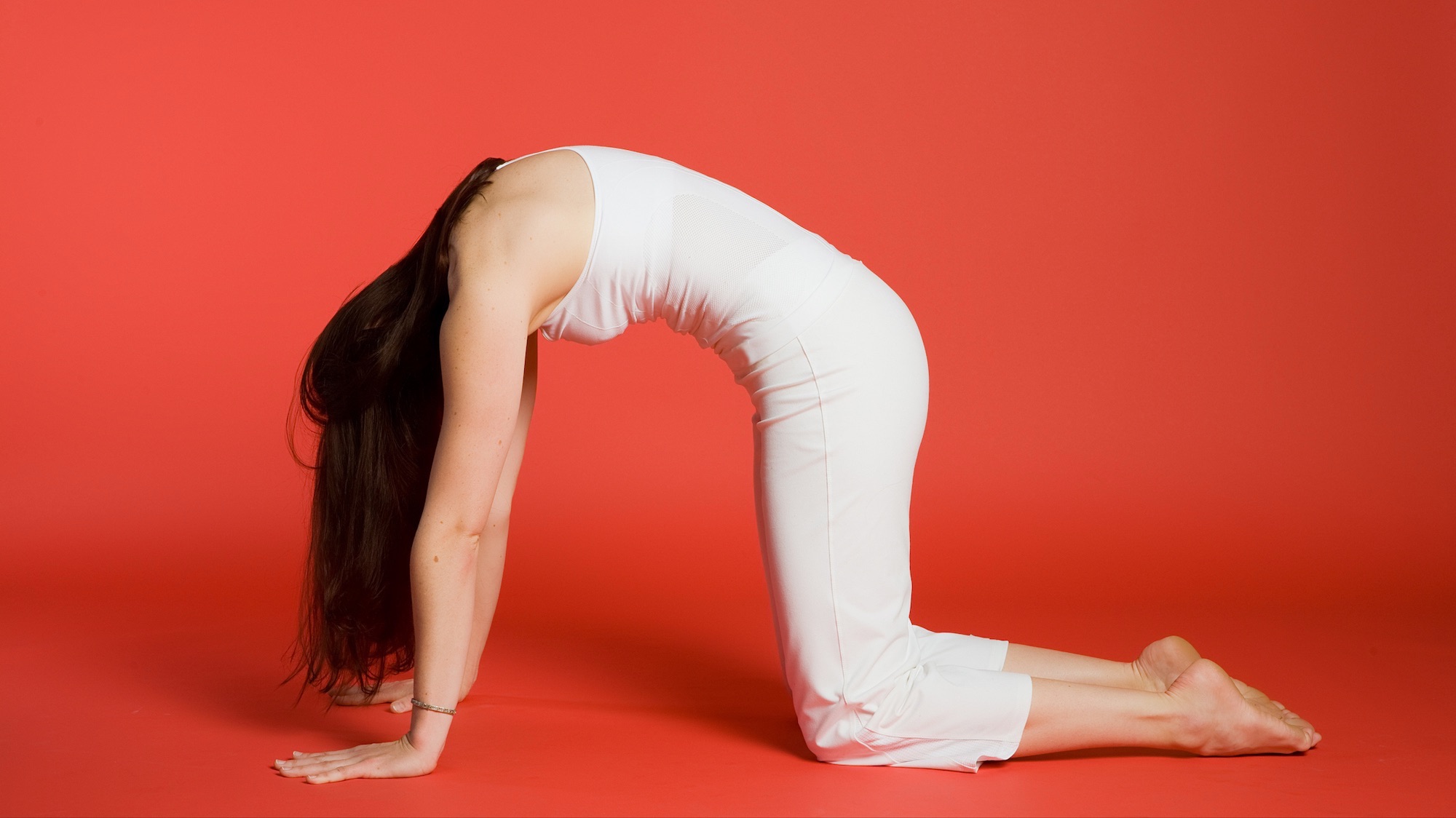
- Cat-Cow (Marjaryasana-Bitilasana) — Gentle spinal mobility that lubricates the lumbar joints and warms up the whole back.
▶ WATCH & FLOW
Calming Yoga for Sciatica Pain Relief
Let this guided flow do the work — move slowly, breathe deeply, and feel your nervous system begin to soften and let go.
Follow along. Breathe. Let your body lead.
More guided flows at Yogaendless.
Breathwork That Soothes the Sciatic Nerve
Pain triggers the fight-or-flight response, which tightens muscles further and amplifies discomfort. Slow, conscious breathing directly counters this — activating the parasympathetic nervous system and signalling to your muscles that it's safe to release.
Try box breathing before your practice: inhale for 4 counts, hold for 4, exhale for 4, hold for 4. Even 5 rounds can dramatically reduce muscle guarding around the lower back. Pair this with your poses for noticeably deeper relief.

Building a Daily Sciatica Yoga Routine
Consistency beats intensity — especially with nerve-related pain. A 15-minute daily practice is far more effective than an occasional 60-minute session. Here's a simple structure to follow:
- Morning (5 min): Cat-Cow + Child's Pose to wake the spine gently
- Midday (5 min): Reclined Pigeon on both sides — especially if you sit a lot
- Evening (5 min): Supine Spinal Twist + Legs Up the Wall to decompress and restore
Track how your pain levels shift over 2 weeks. Most people notice meaningful improvement within 10–14 days of gentle, daily movement.
🧘 Mindful Check-In
Healing from sciatica isn't a straight line — some days will be easier than others, and that's completely okay. What matters most is showing up with patience and care for your body. Each breath you take on the mat is an act of kindness toward yourself. Keep going — gently, steadily, one stretch at a time.
🌿 YOGAENDLESS ONLINE CLASSES
Your Mat. Your Time. Your Practice.
Join Yogaendless for live group classes, private sessions & on-demand flows — beginner-friendly and built for real life. No experience needed. Just show up.
✦ Live & On-Demand
✦ All Levels Welcome
✦ Group & Private Classes
✦ Practice Anywhere
Explore Classes at Yogaendless →
Your body is not the enemy — it's asking for your attention and care. Trust the process, roll out your mat, and let yoga be your gentlest path back to comfort.
▶ WATCH & FLOW
Calming Yoga for Sciatica Pain Relief
When words aren't enough, movement speaks — press play and let your body find its ease.
Follow along. Breathe. Let your body lead.
More guided flows at Yogaendless.