
Why Flexibility Takes Longer Than You Think (and How to Be Patient With It)
Yes, you will get there. It just won’t happen on the timeline your Instagram feed suggests.
Key takeaways
- Early gains in flexibility (the first two to three weeks) mostly come from your nervous system adjusting, not your muscles actually lengthening.
- Real structural change in muscle and connective tissue takes months of consistent practice, not weeks.
- Around ten minutes of stretching per muscle group per week is enough to see steady improvement, according to recent research.
- Consistency beats intensity. Three short sessions a week will get you further than one long, forceful one.
- Plateaus are a normal part of the process, not a sign that yoga “isn’t working” for you.

Why flexibility feels so slow to build
Flexibility takes longer than most people expect because your body changes in stages, and only the first stage is fast.
When you start a new stretch, whether it is a hamstring fold or a hip opener, your first improvements come almost entirely from your nervous system. Your brain and spinal cord are learning that a deeper range of motion is safe, so they gradually stop firing the protective reflex that used to hold you back. This is often called neural adaptation, and it can produce noticeable changes within the first couple of weeks of regular practice.
What has not changed yet is the tissue itself. Muscle fibres, tendons and the connective tissue (fascia) wrapped around them take much longer to remodel. Meaningful structural change, the kind that lets your body hold a new range of motion without constant re-training, tends to unfold over three to six months of sustained, gentle stretching. That is simply how tissue adapts, and it is the same in a twenty year old dancer as it is in a fifty year old beginner.
Tip: if a stretch feels easier after just one or two sessions, that is your nervous system relaxing, not your hamstring getting longer overnight. Keep showing up. The tissue is catching up behind the scenes.
What the research actually says
The good news is that flexibility gains do not require dramatic effort. A large review of stretching research pooling data from 189 studies covering more than 6,500 adults found that holding a stretch for around four cumulative minutes in a single session produced the best immediate improvement. Just as importantly, the researchers found that the total weekly time spent stretching each muscle mattered more than how often you stretched it, with around ten minutes a week per muscle being enough for steady gains. Encouragingly, the same review found that age, sex and starting fitness level did not change who was able to improve, everyone can make progress (The Conversation, 2026).
Harvard Health Publishing makes a similar point in plainer terms: flexibility work is a long game. Their guidance notes that stretching once will not magically produce perfect flexibility, and since it likely took months for muscles to become tight, it will take weeks to months of consistent effort to loosen them again (Harvard Health Publishing).
At a deeper physiological level, research into static stretch training over several weeks has documented measurable changes in maximal strength, muscle thickness and flexibility outcomes after a sustained daily stretching protocol, reinforcing that the deeper adaptations genuinely need sustained time to develop (PMC / National Library of Medicine).
None of this means yoga is slow to help you feel better. Reduced tension, calmer breathing and easier movement in daily life often show up quickly. It just means the deep, durable flexibility gains, like sitting comfortably in a full split or resting easily in pigeon pose, are a months-long project rather than a weeks-long one.
Common mistakes that stall your progress
Most flexibility frustration comes from a handful of avoidable habits rather than bad luck or “bad genetics.”
Forcing the stretch
Pushing into pain rather than mild tension can trigger your body’s protective reflex, the exact opposite of what you want. Your muscles tighten to defend themselves, and you end up further from your goal, not closer to it.
Tip: aim for a sensation of gentle pulling, never sharp pain. If you are gritting your teeth, ease off.
Stretching only occasionally
Flexibility fades quickly without upkeep. A single intense session every few weeks does far less than short, regular sessions spread across the week.
Comparing your body to someone else’s
Hip structure, tendon length and years of prior activity all shape how quickly someone’s range of motion opens up. Comparing your week three fold to another student’s is rarely a fair comparison.
Skipping the warm-up
Stretching cold tissue is both less effective and more likely to cause strain. A few minutes of gentle movement before deeper stretches makes a real difference.

A realistic timeline, week by week
Here is roughly what to expect if you stretch consistently, three to five times a week, for a given muscle group.
Weeks 1 to 2
Your nervous system starts allowing a slightly deeper range. Stretches that felt intense at first begin to feel more manageable. This is real progress, even though the tissue itself has barely changed yet.
Weeks 3 to 6
Range of motion continues to open up, and the improvement starts to feel a little more stable between sessions rather than resetting each time. Many students notice daily movements, like bending to tie shoes or twisting to check a blind spot, feel easier.
Months 3 to 6
This is where the deeper structural adaptation in muscle and connective tissue tends to show up, making new ranges of motion feel more like your natural baseline rather than something you have to fight for each time.
Tip: track progress with photos or simple notes every few weeks rather than judging session to session. Day-to-day fluctuation is normal and can be discouraging if you are watching too closely.
How to practise patience on the mat
Patience with flexibility is really a practice in itself, and it tends to mirror the patience yoga asks of us everywhere else.
Set the expectation early that this is a months-long project, not a weeks-long one. Choose a small number of key stretches for whatever is tightest for you, hips, hamstrings, shoulders, and return to them consistently rather than chasing a different pose every class. Notice non-flexibility wins too: better sleep, calmer breathing, less tension in the neck and shoulders. These often arrive long before the visible range of motion does, and they are worth celebrating on their own.
I tell my students that flexibility is not something you force, it is something you invite, again and again, until your body finally believes you mean it. The days it feels like nothing is happening are often the days the real work is quietly taking place.
Anjali Pandey, Founder & Lead Instructor, YogaendlessIf you have a previous injury, a chronic joint condition, or persistent pain that does not ease with gentle stretching, it is always worth checking in with a doctor or physiotherapist before pushing further into a new range of motion. Yoga can support your mobility, but it is not a substitute for medical care when something feels genuinely wrong rather than simply unfamiliar.
Frequently asked questions
How often should I stretch to see results?
Aim for three to five short sessions a week for the muscle groups that matter most to you, rather than one long session. Consistency across the week tends to matter more than the length of any single stretch.
Can I improve my flexibility at any age?
Yes. Research suggests age is not a barrier to meaningful flexibility gains, though older or previously sedentary bodies may simply need a little more patience and a gentler starting point.
Why did my flexibility improve fast at first, then seem to stall?
The early, faster gains usually come from your nervous system easing off its protective reflex. The slower phase that follows is your muscles and connective tissue genuinely remodelling, which naturally takes longer.
Is it normal for one side of my body to be more flexible than the other?
Very common, often linked to handedness, old injuries, or daily habits like which leg you cross first. Working both sides evenly, without forcing the tighter side to match the looser one immediately, usually evens things out over time.
Should stretching ever hurt?
No. A sensation of mild pulling or tension is normal; sharp or shooting pain is a sign to ease back. If pain persists, it is worth checking in with a doctor or physiotherapist.
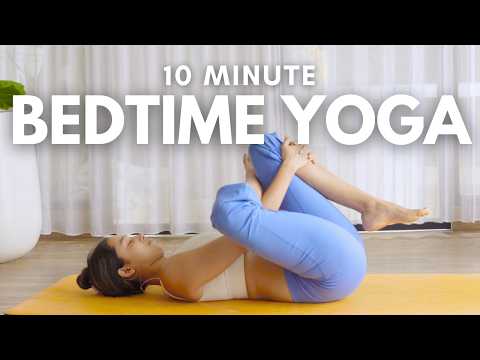
Want a sense of how this looks in practice? Here are a few recent classes from our channel.


About Yogaendless
Yogaendless is an online yoga studio led by Anjali Pandey, offering live group classes, private coaching, on-demand flows, corporate sessions, and retreats, with a physical home at Loft 52, Bandra, for anyone who wants to build strength, flexibility and calm, whatever their starting point.