
There is a particular kind of restlessness that has become so ordinary in modern life that most people no longer notice it. It lives in the three seconds between putting down a cup of coffee and picking up your phone. In the half breath before you open a new browser tab. In the low hum of unease that arrives whenever a room goes quiet. This restlessness is the brain that has learned, through thousands of daily repetitions, that stimulation is the default state of being alive.
We did not choose this consciously. It happened gradually each notification answered, each moment of boredom resolved by scrolling, each commute filled with podcasts quietly training the brain to expect continuous new information. The mind adapted, as it always does. And now the absence of stimulation itself has started to feel like discomfort.
The average person now switches attention between tasks every 47 seconds, and it takes over 23 minutes to return with full focus. This is not a willpower problem it is a nervous system that has been recalibrated toward perpetual motion.

The practice of stillness begins with noticing how unfamiliar stillness has become.
How the Nervous System Learns to Stay Alert
The autonomic nervous system operates in two broad modes: fight-or-flight and rest-and-digest. Notifications, breaking news, and social media feeds can keep the sympathetic nervous system in low-level activation for extended periods. This is not the sharp spike of acute fear it is a subtler, chronic alertness that keeps the body just slightly above genuine ease.
From a somatic perspective, this chronic activation has tangible physical signatures: tightening in the jaw, neck, and shoulders; breath that is shallow and high in the chest; a quality of bracing in the diaphragm. These patterns become so habitual that most people cease to notice them.
When you last sat in a quiet room with no task and no phone, how long before you felt the pull toward something else? What did that pull feel like in your body?
The Disappearance of Transitional Space
Transitional space the unstructured gaps between activities where the mind can wander and integrate has been systematically colonized by our devices. The commute now has a podcast. The line at the coffee shop has a scroll. Without these gaps, experience accumulates without being processed, creating internal pressure many people feel but cannot name.
In yoga, the concept of pratyahara (withdrawal of the senses) addresses this need. It recognizes that genuine attention depends on the ability to periodically turn the external world volume down. Rebuilding this capacity requires not grand gestures but the patient, repeated practice of tolerating quiet.
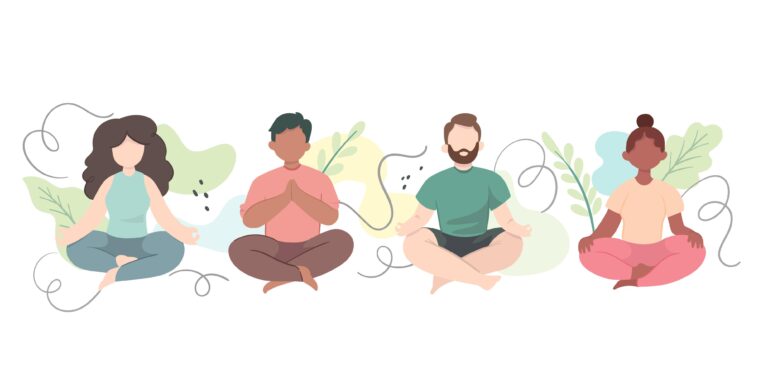
Returning to the breath is often the first honest conversation the body has had all day.
Practical Reconnection
Effective changes in nervous system patterns rarely come from dramatic lifestyle overhauls. They come from small, repeated moments of returning to the body actual experience. The most accessible entry point is the breath not as a technique, but as a reference point that always reflects your current state of activation.
Creating one genuinely unoccupied transition per day five to fifteen minutes without content or tasks offers the nervous system what it has been deprived of: actual downtime. Sitting with tea without a podcast. Walking without earphones. Lying quietly before reaching for the phone. These are small acts, but in the context of the contemporary nervous system, they are genuinely radical.
What is one small moment in your day that could become a deliberate pause rather than an automatic reach for stimulation?
The brain that has been saturated with stimulation is not broken. It is simply shaped by its conditions. The most effective response is patient, consistent, kind attention the gentle, daily work of coming back to the body, to the breath, and to the quiet that was never as far away as it seemed.
Our practices are designed not to add more to an already full life, but to help you return, gently and repeatedly, to the steadiness beneath the noise.
Explore Mindful Practices